Wallpaper has shed its outdated reputation and re-emerged as a defining element of modern interior design. No longer confined to the past, it is now a bold medium for artistic expression, fueled by daring color palettes, intricate patterns, and a celebration of global influences. From moody jewel tones to delicate organic motifs, wallpaper has become a transformative force, turning walls into curated statements that reflect personal style and contemporary design movements. With the resurgence of vibrant colors, textural finishes, and imaginative designs, today’s wallpaper is shaping interiors in ways that feel both luxurious and deeply personal.
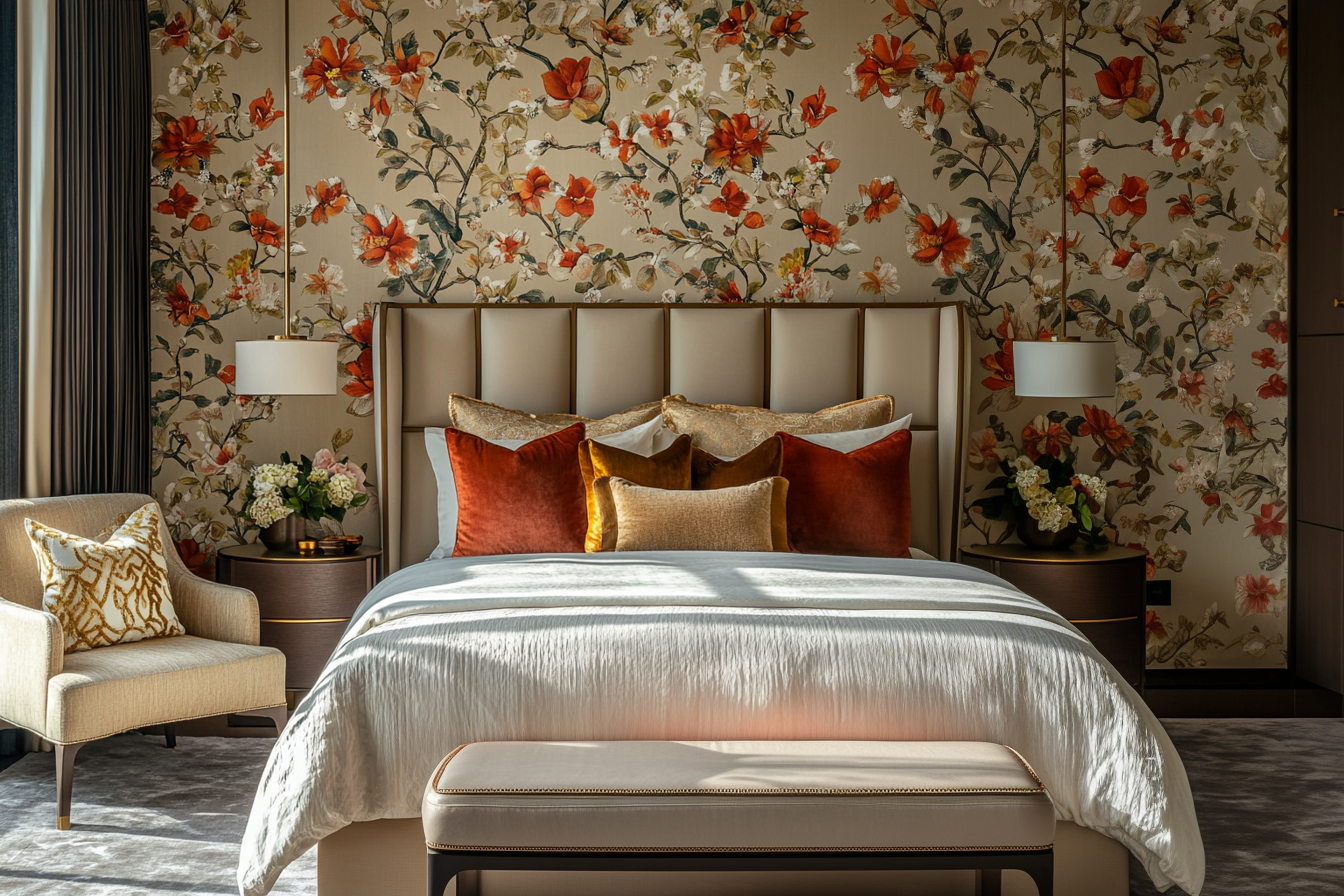
The latest color trends in wallpaper signal a departure from the expected. Earthy neutrals such as terracotta, ochre, olive green, and chalky whites evoke warmth and a connection to nature, offering a grounded yet refined aesthetic. Design houses like Farrow & Ball and Little Greene are enhancing these muted tones with subtle metallic accents, adding a layer of understated luxury. Meanwhile, jewel tones are experiencing a renaissance, with deep emerald, sapphire blue, amethyst, and burnt amber lending depth and drama to modern spaces. Cole & Son has embraced these rich shades with elaborate damasks and botanical prints, while Graham & Brown introduces geometric designs with lacquered finishes that shimmer like stained glass. On the softer side, muted pastels in dusty rose, faded lavender, sage, and buttermilk bring a nostalgic yet contemporary feel, with Swedish studio Boråstapeter incorporating abstract brushstrokes and Art Deco-inspired lines that blur the boundaries between classic and modern.
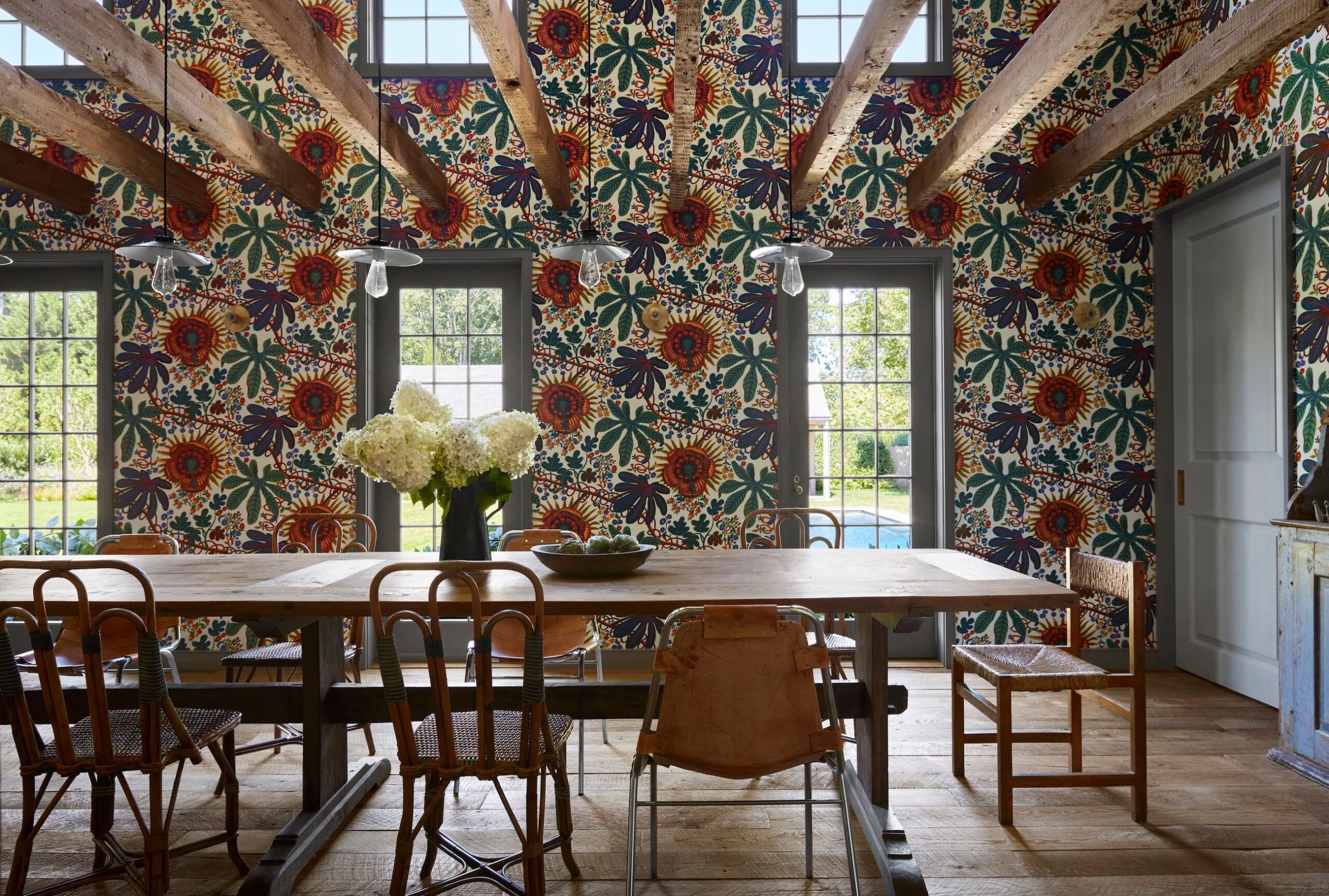
Beyond color, emerging design styles are reshaping wallpaper’s role in interiors. Organic maximalism, with its lush botanical murals, oversized florals, and freehand inkblots, is making a striking impact. Sanderson in the UK and Phillip Jeffries in the US are leading the charge, drawing inspiration from tropical jungles and traditional Japanese ink paintings. Retro futurism, on the other hand, embraces the vibrancy of psychedelic swirls, atomic-age shapes, and neon accents. Brands like Mindthegap mix vintage-inspired patterns with metallic foils, while Hygge & West reinvents mid-century motifs in unexpected colorways like acid yellow and cobalt blue. Another rising trend is abstract geometry, where asymmetrical grids, layered triangles, and optical illusions create a sense of depth and movement. Finnish design house Marimekko is known for its bold, graphic prints, while Élitis in France experiments with embossed wallpapers that manipulate light and shadow for a dynamic visual effect.
Several global brands are at the forefront of this wallpaper renaissance. Cole & Son, a British heritage brand, continues to innovate by reimagining archival patterns such as Nuvolette’s dreamy cloud formations and Palm Jungle’s tropical foliage, now updated with contemporary gradients. Osborne & Little merges classic craftsmanship with a modern sensibility, exemplified by their Cirrus collection, where stormy hand-painted skies are rendered in moody grays and deep blues. Italian brand Wall&decò pushes boundaries with metallic and textured finishes, offering wallpapers that shift between pearl and charcoal depending on the light. Meanwhile, Australia’s Tigercat brings a playful energy to the industry, with banana-leaf prints in neon hues and abstract desert landscapes rendered in rich terracotta and indigo tones.
As the world becomes increasingly digital, wallpaper provides a tactile, immersive counterpoint—a way to infuse personality and artistry into physical spaces. Its resurgence reflects a larger cultural movement away from sterile minimalism and toward interiors that tell stories, spark joy, and honor global design traditions. Whether adorning a powder room in jewel-toned damask or covering a living room in a retro-futuristic mural, wallpaper proves that walls are no longer just backgrounds—they are canvases waiting to be transformed.
Forget the notion of a single accent wall. The future of wallpaper lies in entire rooms enveloped in bold colors and intricate designs, creating immersive environments that redefine modern living. As the legendary designer Dorothy Draper once said, “If it looks right, it is right.” And right now, wallpaper has never looked more spectacular.