Wood panels have evolved far beyond traditional wall cladding, emerging as one of the most expressive architectural surfaces in contemporary interiors. Today’s applications range from subtle textural treatments to bold sculptural installations, allowing timber to function as both material and art. What unites these approaches is an emphasis on depth, rhythm, and the interplay between light and form.
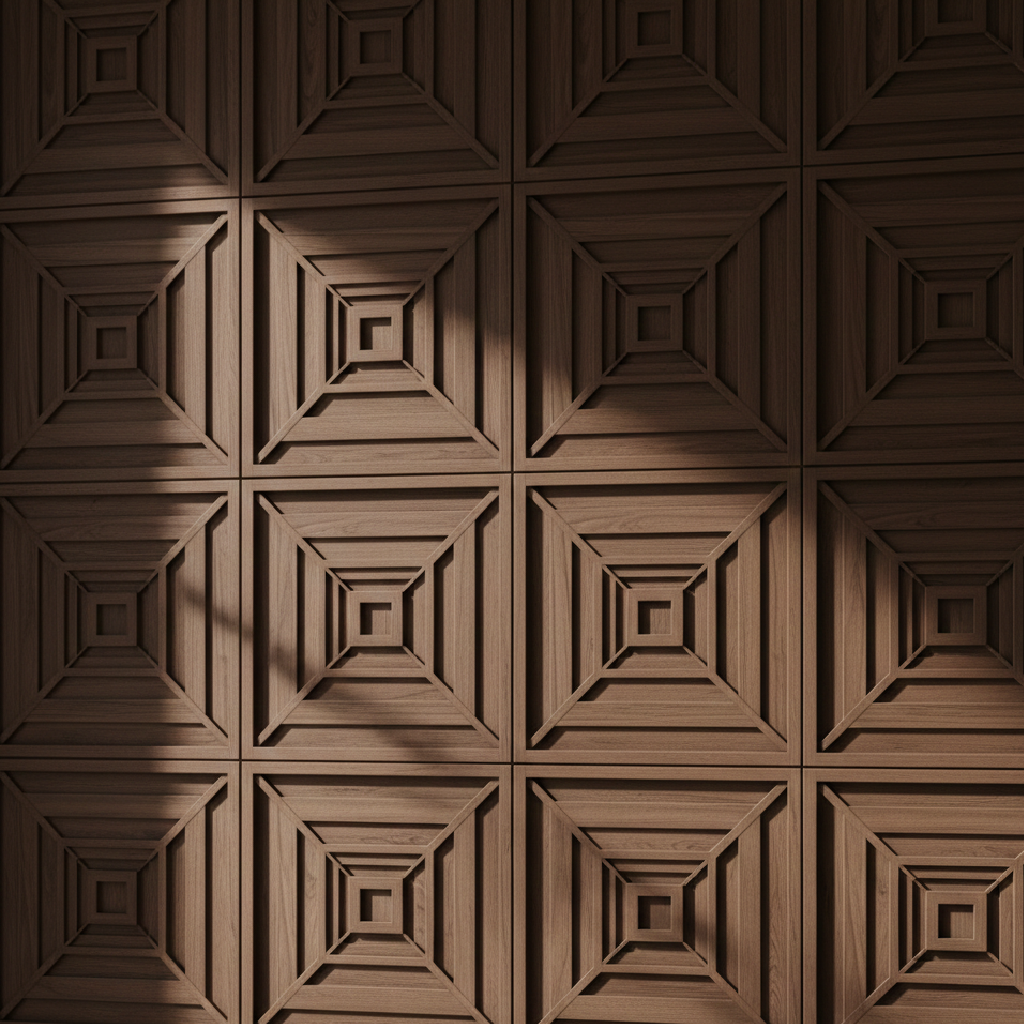
Three dimensional wood panels are among the most striking expressions. Carved, milled, or modular in construction, they introduce sculptural relief through geometric or organic forms. Faceted pyramids, fluted waves, and concave recesses create surfaces that shift throughout the day as light moves across them. Applied in repeating grids or custom compositions, these panels transform walls from passive backgrounds into dynamic architectural statements.
Geometric paneling leans into precision and pattern. Often composed of repeated shapes such as diamonds, chevrons, or angular facets, this style suits modern and contemporary spaces where clarity and structure are paramount. The geometry provides visual interest while maintaining discipline, especially when executed in restrained palettes that allow shadow and grain to take the lead.
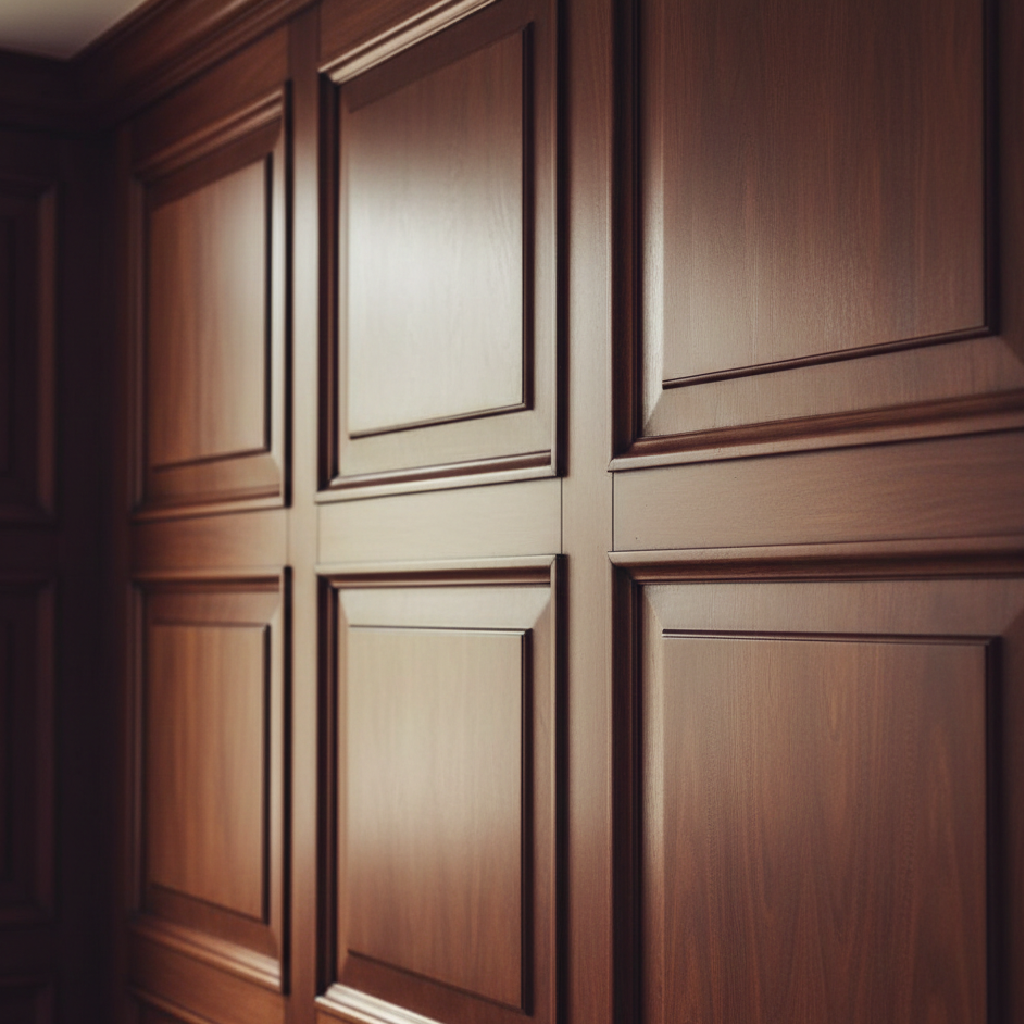
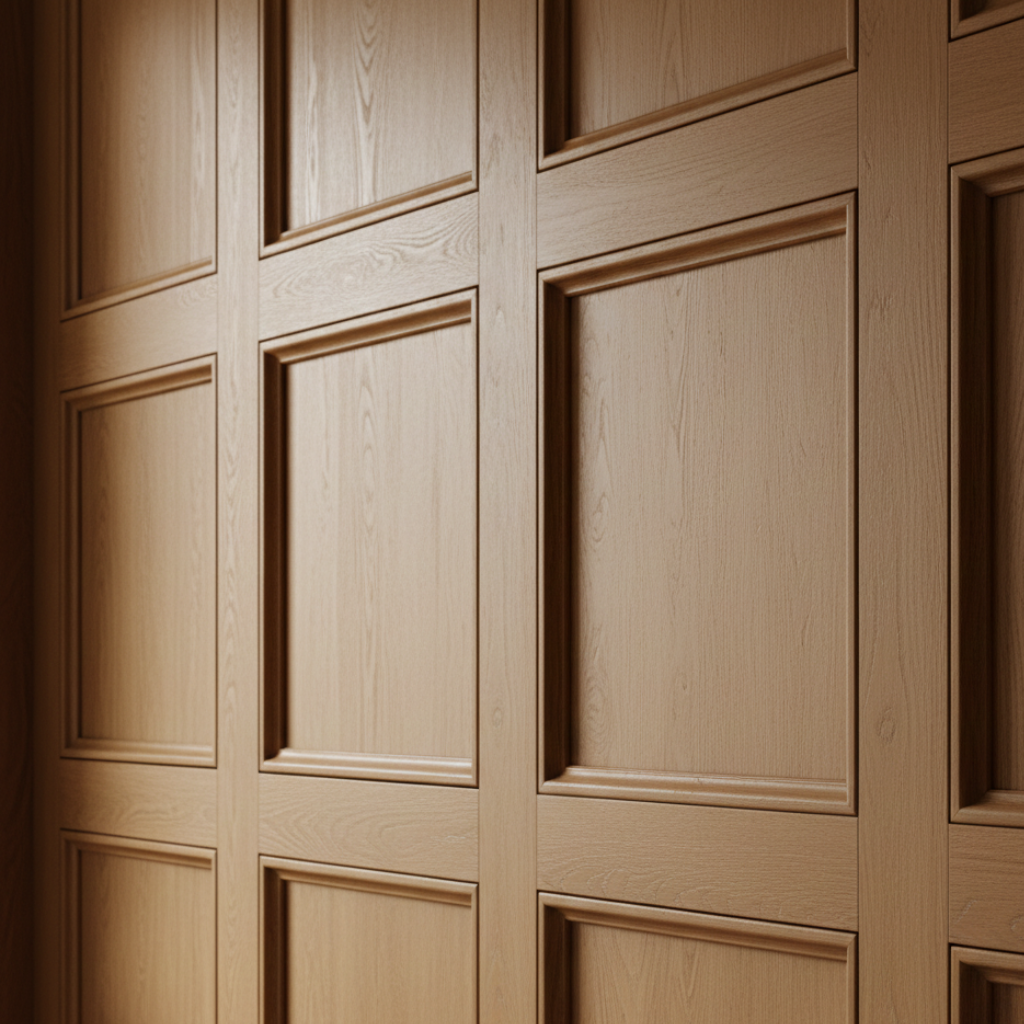
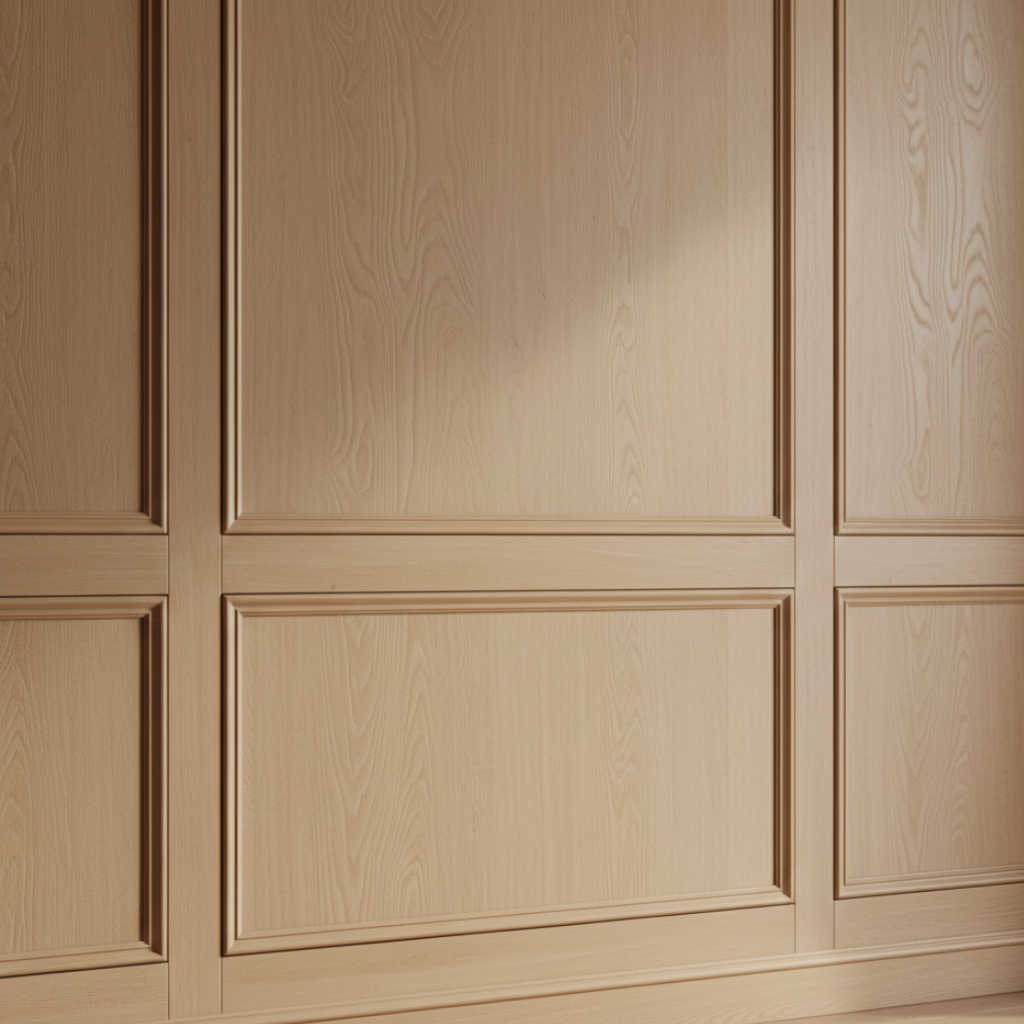
Transitional wood paneling bridges classic and modern sensibilities. Here, traditional techniques like shiplap, tongue and groove, or framed paneling are reinterpreted with cleaner proportions and minimal detailing. When paired with smooth plaster or modern furnishings, these panels add warmth without tipping into nostalgia.
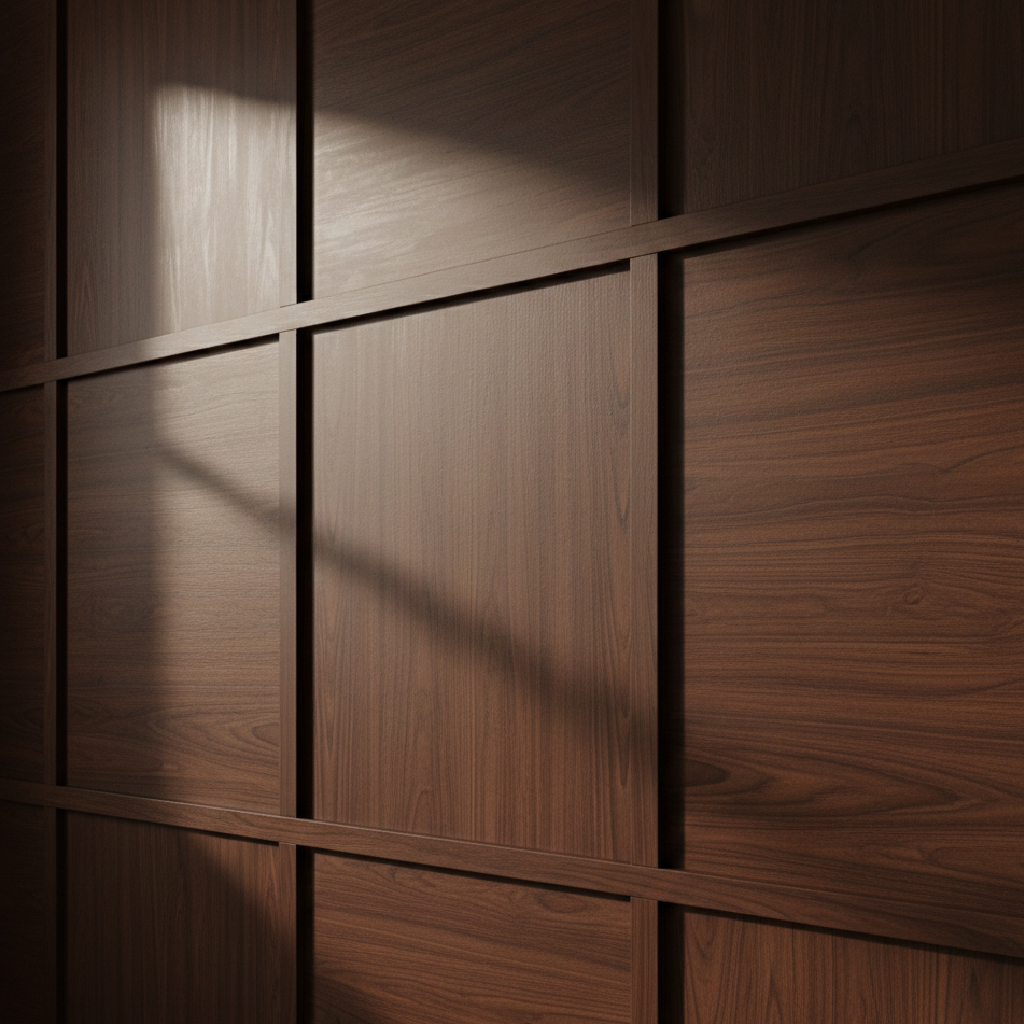
Flat panel systems remain timeless, prized for their quiet elegance. Whether installed vertically to emphasize height or horizontally to elongate space, they provide texture through repetition rather than relief. Slatted and ribbed panels introduce linear rhythm, often wrapping walls and ceilings for continuity.
Across all styles, the application is key. Panels may be full height, partial, or used to articulate specific zones. Natural grain is often left visible, celebrating material authenticity. The result is wood paneling that enhances atmosphere, adds depth, and reinforces architecture with intention rather than ornament.