Between Living and Dining
The quiet beauty of open-plan spaces that connect cooking, conversation, and comfort.
Open-plan dining rooms are where the pulse of modern living quietly beats. They are not confined by walls or defined by formality — instead, they flow seamlessly between kitchen and living areas, shaping a rhythm that feels natural, lived-in, and effortless. Positioned at the heart of the home, these dining spaces bridge the functional and the social, offering a transition that celebrates connection.
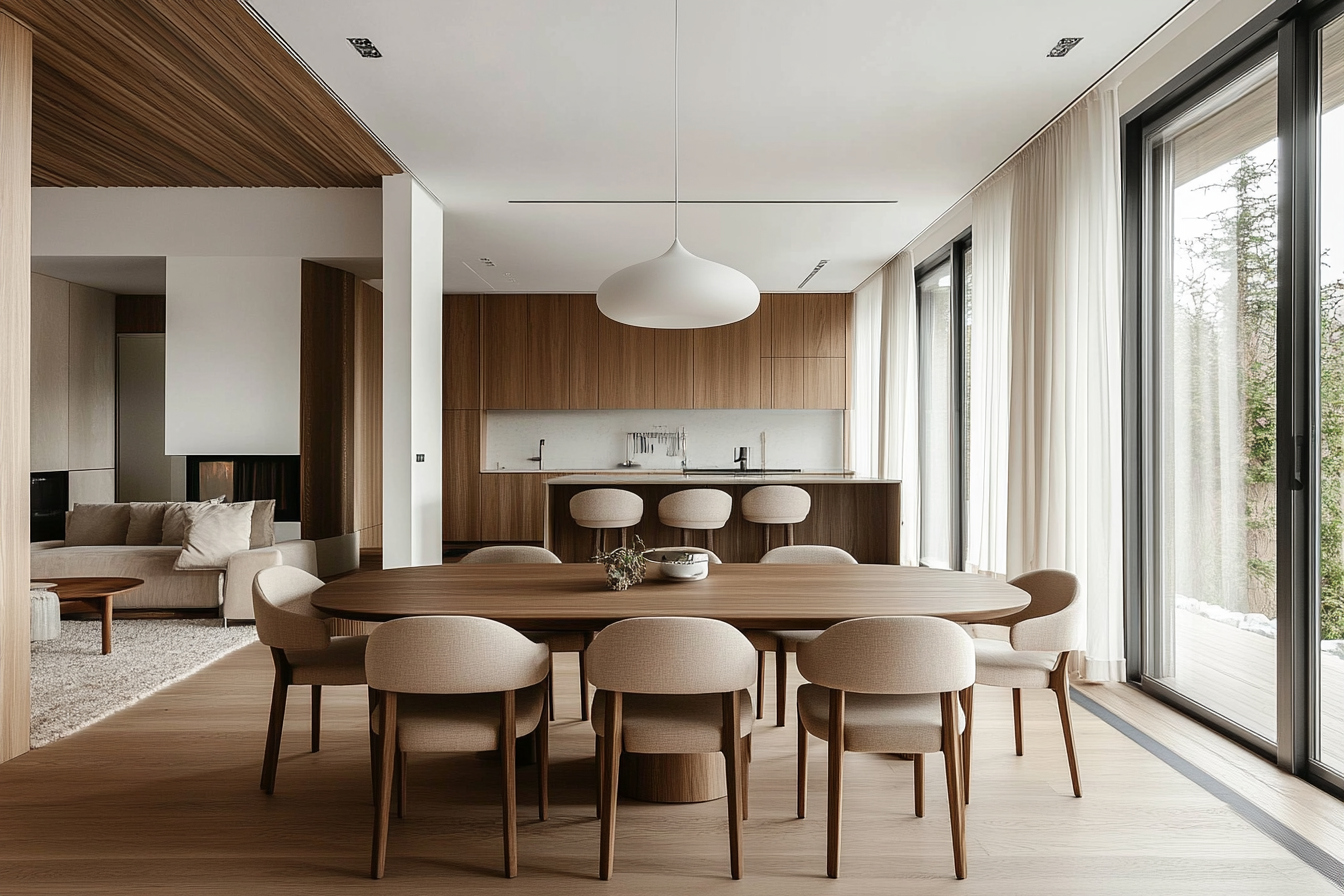
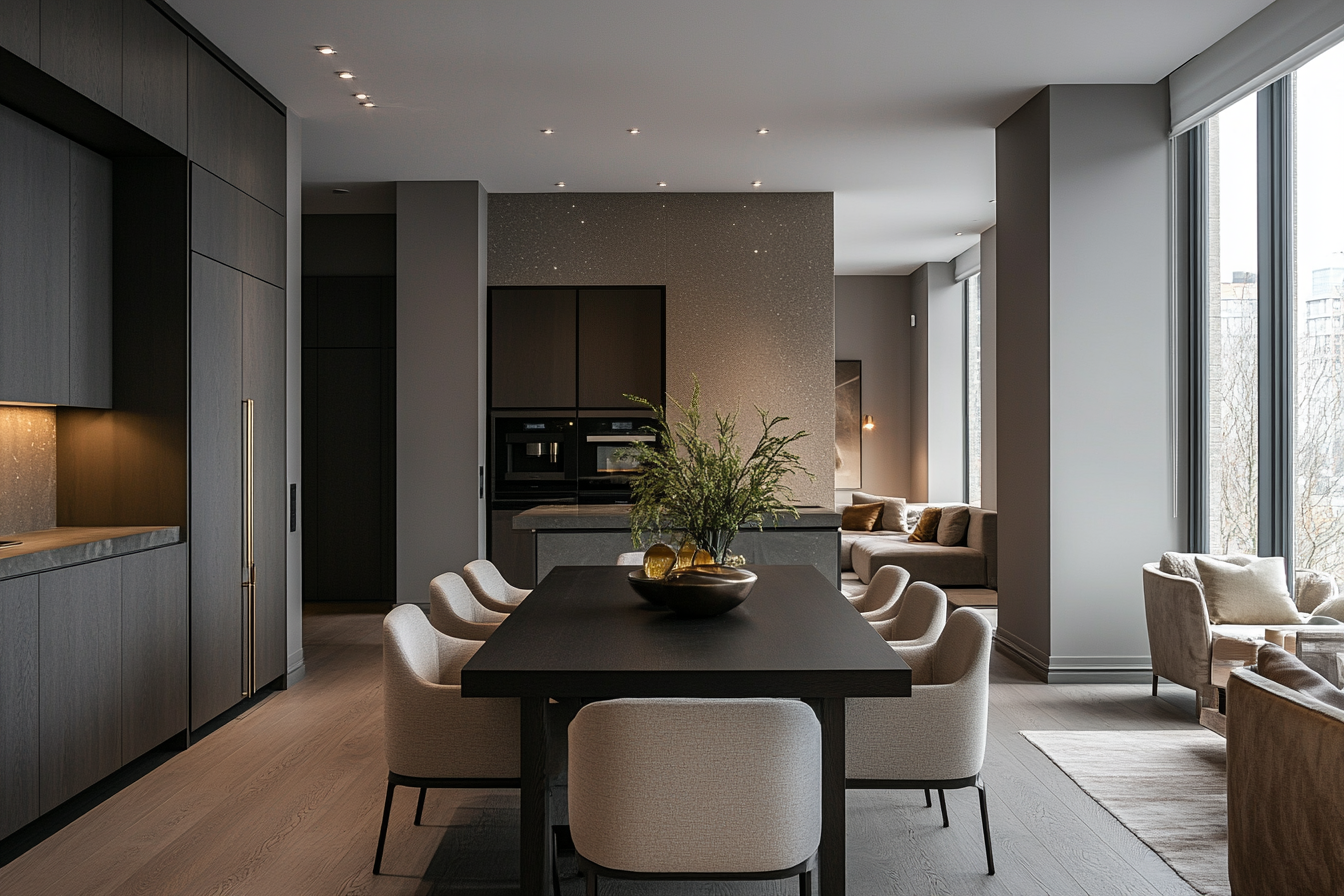
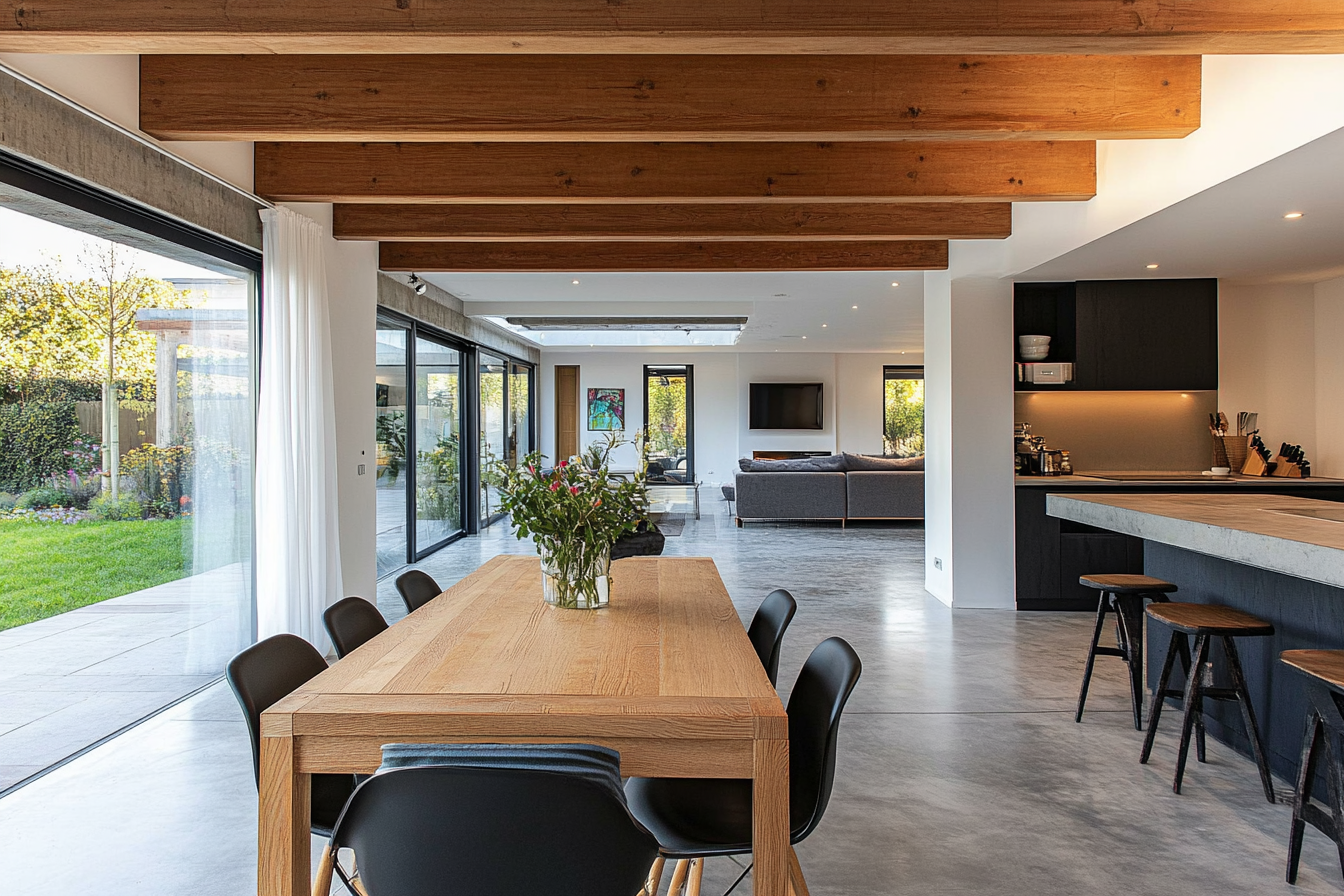
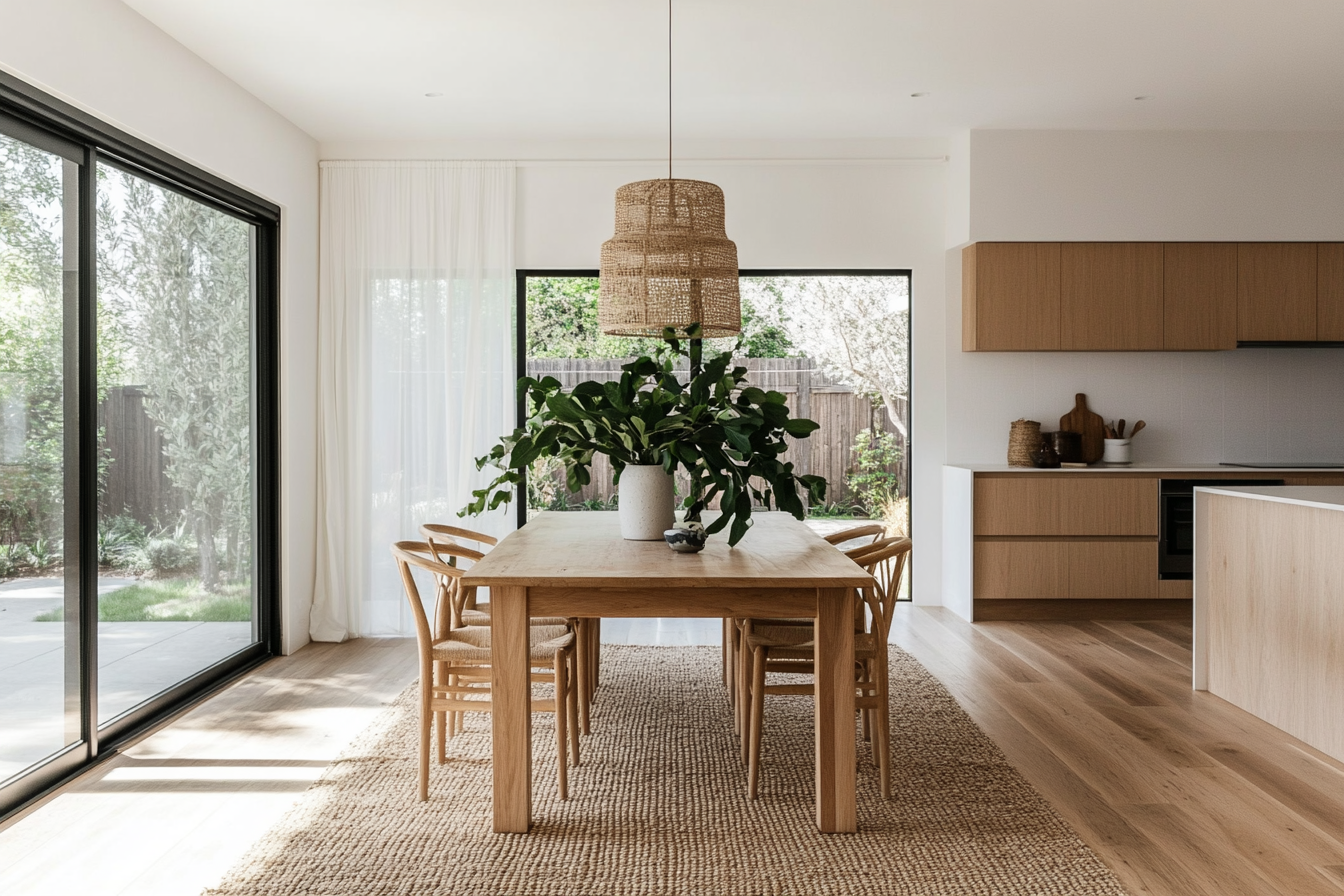
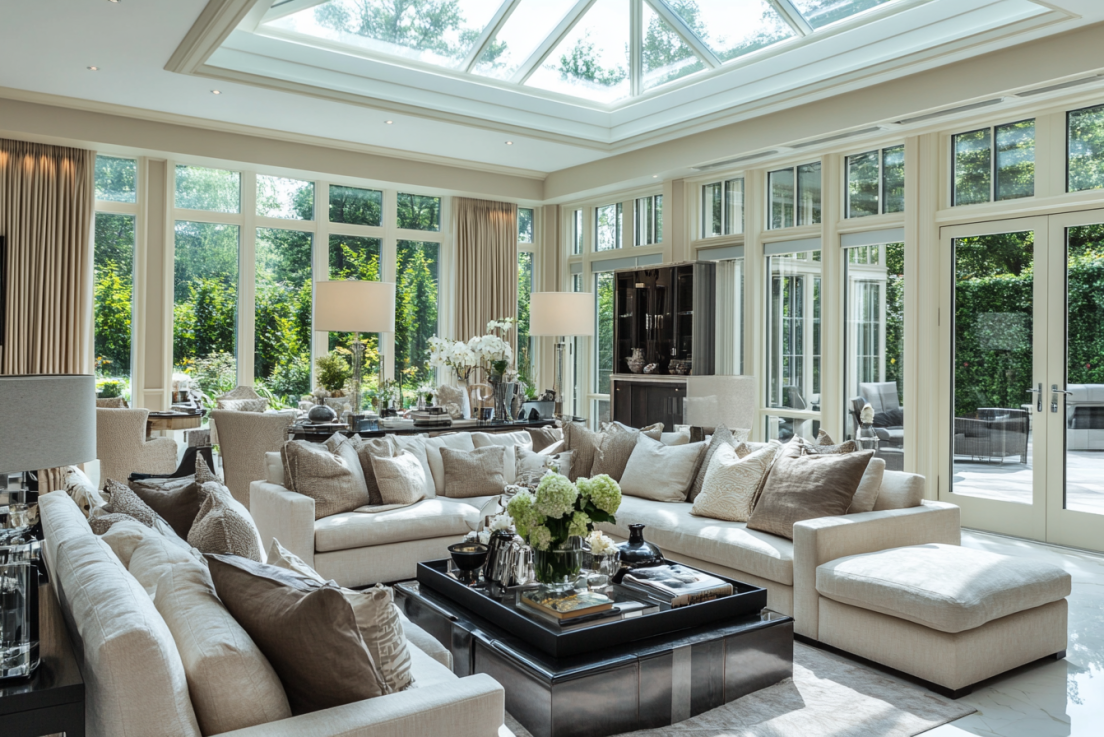
The tone of an open-plan dining room is often serene yet lively — a balance between intimacy and openness. Natural light becomes a key element, flooding through from adjoining rooms and softening the boundaries that once divided household zones. The dining area no longer stands apart as a ceremonial space but merges with daily life. Here, one can cook, converse, or linger over coffee while still being part of the ongoing hum of the home.
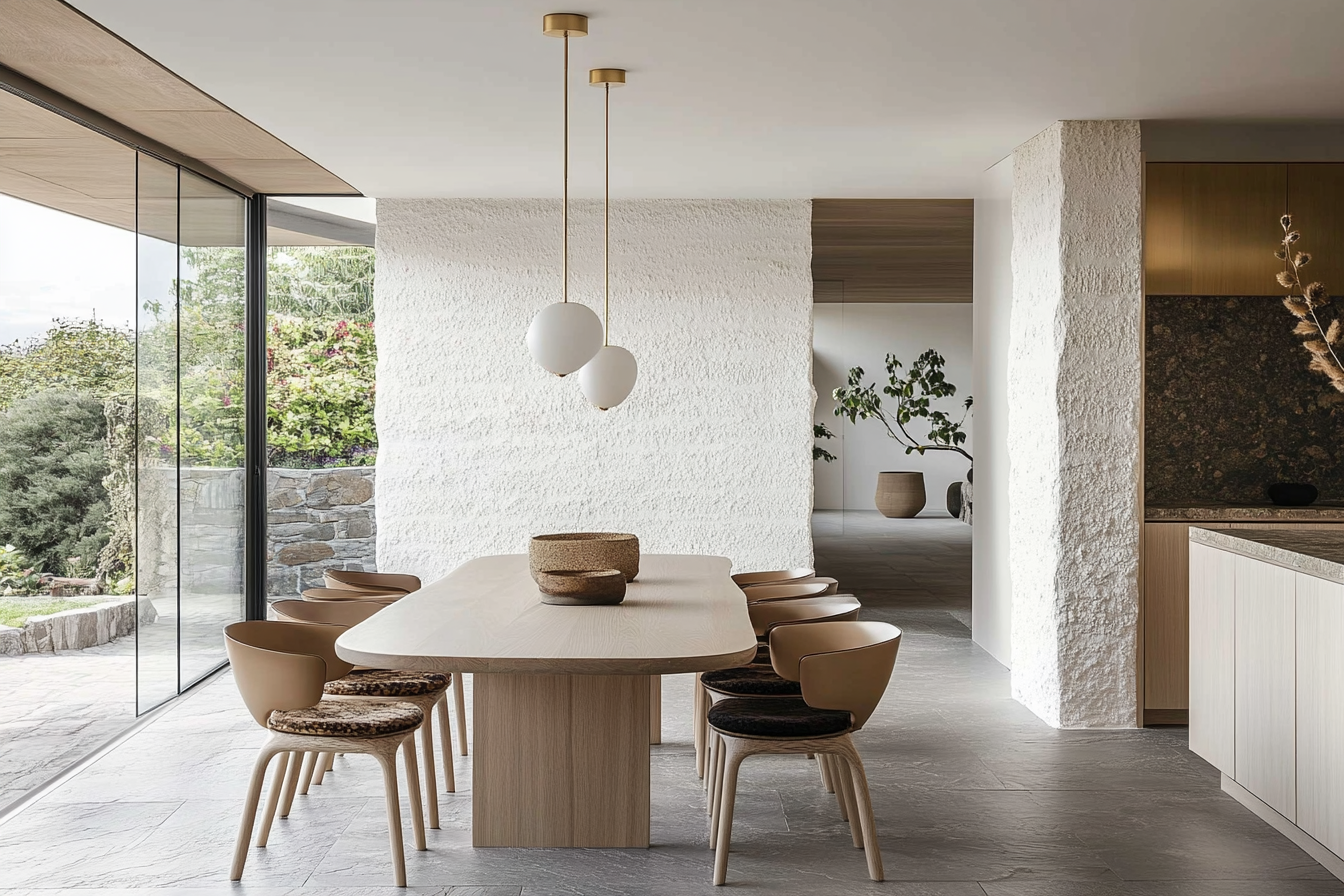
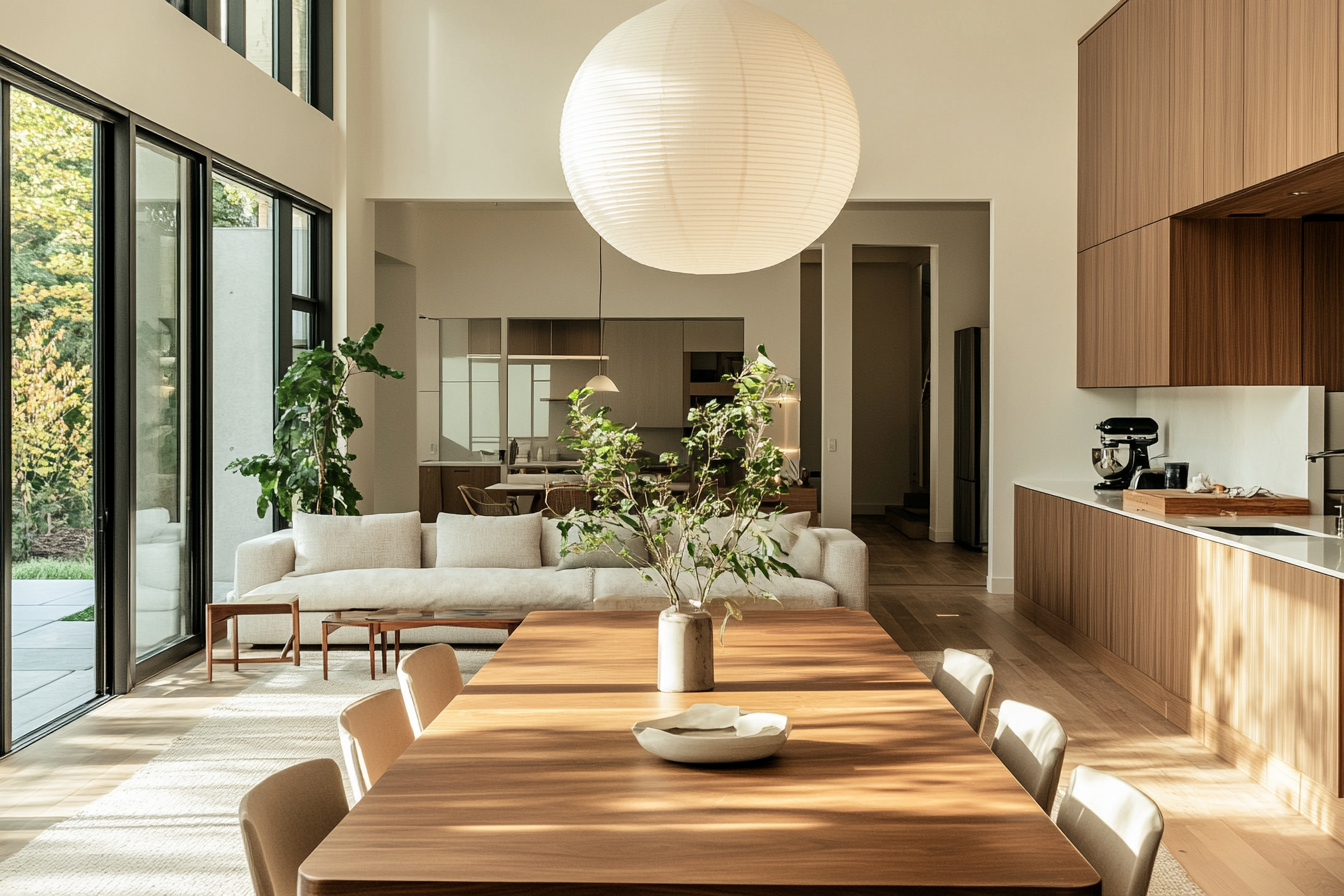
Materiality plays a central role in shaping mood and tone. Warm timber tables anchor the space with an organic touch, while stone or concrete floors extend from kitchen to lounge, enhancing the feeling of visual continuity. The dining chairs — often sculptural, sometimes minimalist — define personality without disturbing the calm. Even lighting becomes storytelling: a pendant that hangs low over the table signals focus and intimacy, while ambient light from the living room adds softness to evenings shared with friends or family.
Beyond aesthetics, open-plan dining encourages participation. It invites conversation during meal preparation, laughter that flows across zones, and gatherings that feel unstructured yet refined. The design allows movement and flexibility — spaces that can adapt from a quick weekday breakfast to a candlelit dinner with guests.
Ultimately, an open-plan dining room is more than a place to eat; it is the social anchor of contemporary living. It blurs the distinction between cooking, lounging, and entertaining, embodying a lifestyle that values togetherness over separation. In these spaces, design is not just about how we live — it’s about how we connect. And somewhere between the kitchen and the living room, life unfolds beautifully.