Indoor Outdoor Living In Extreme Landscapes
Image Credits: Corey Gaffer
How terraces, pools, and glass walls dissolve boundaries between house and desert.
Indoor outdoor living has long been associated with temperate climates and gentle landscapes. Courtyards in the Mediterranean, garden pavilions in Asia, verandas stretching across coastal homes. The assumption has often been that extreme environments demand separation. Heat, wind, and harsh light must be kept at bay. Yet some of the most compelling contemporary architecture challenges that assumption entirely.
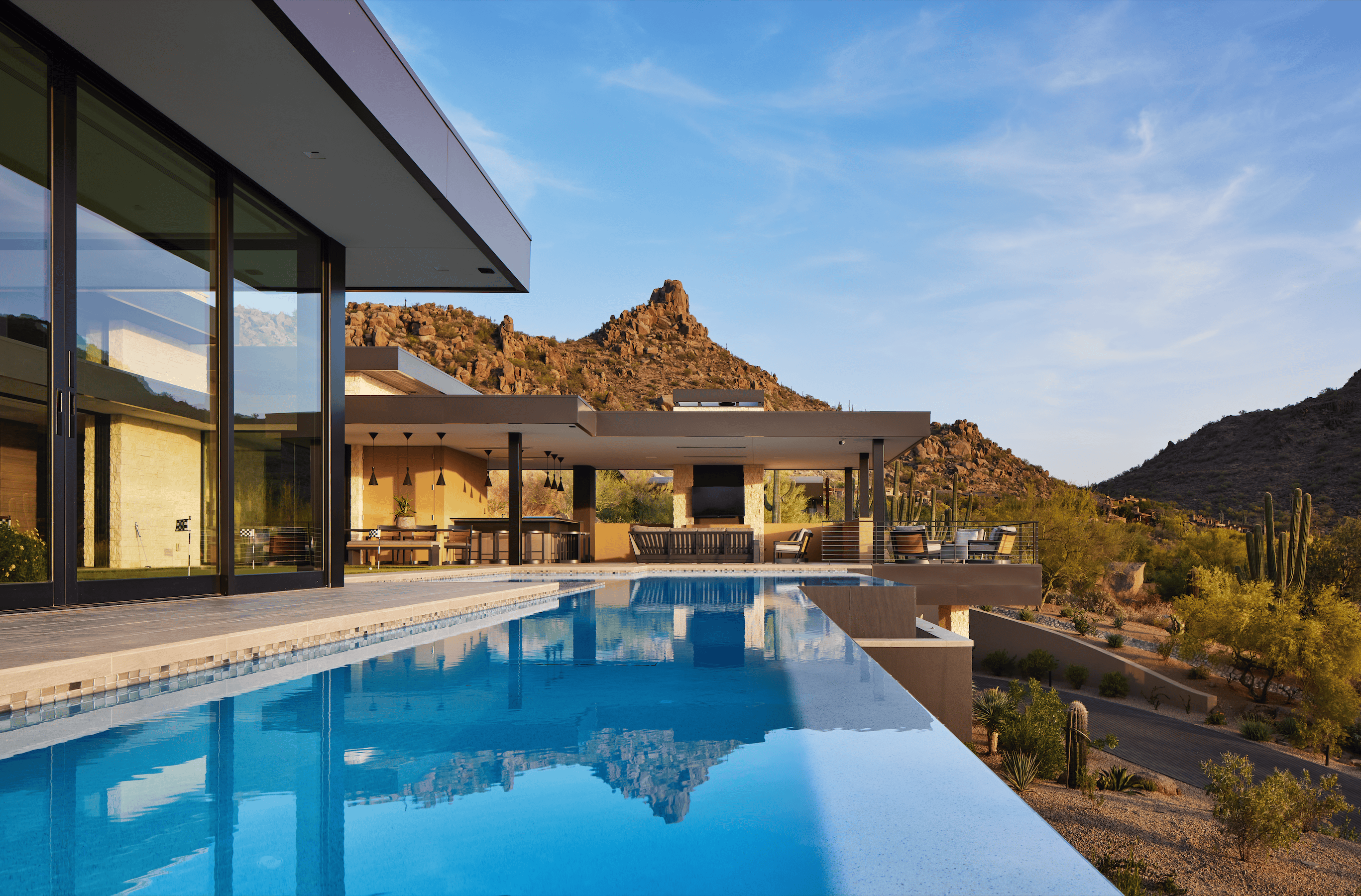
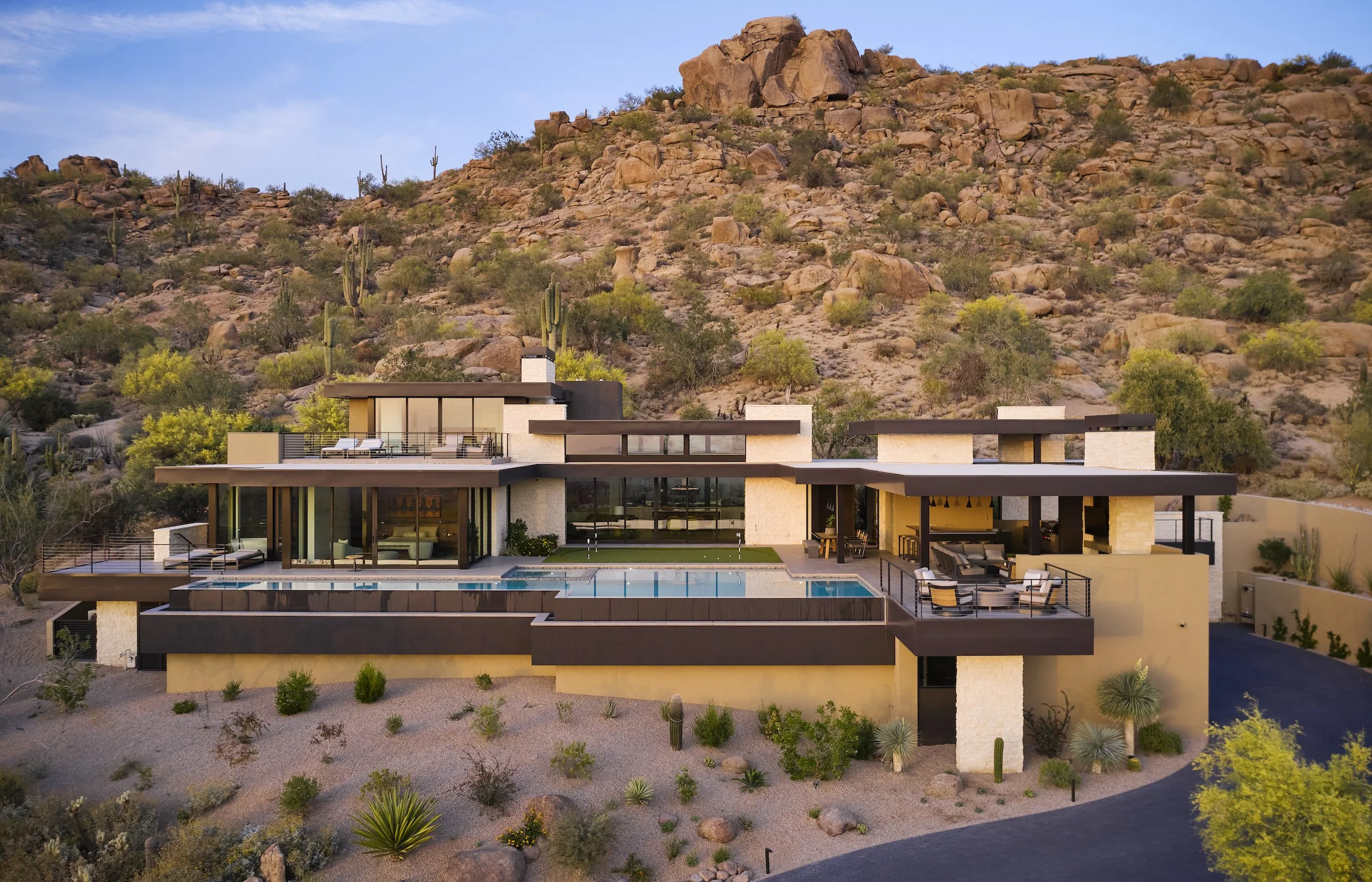
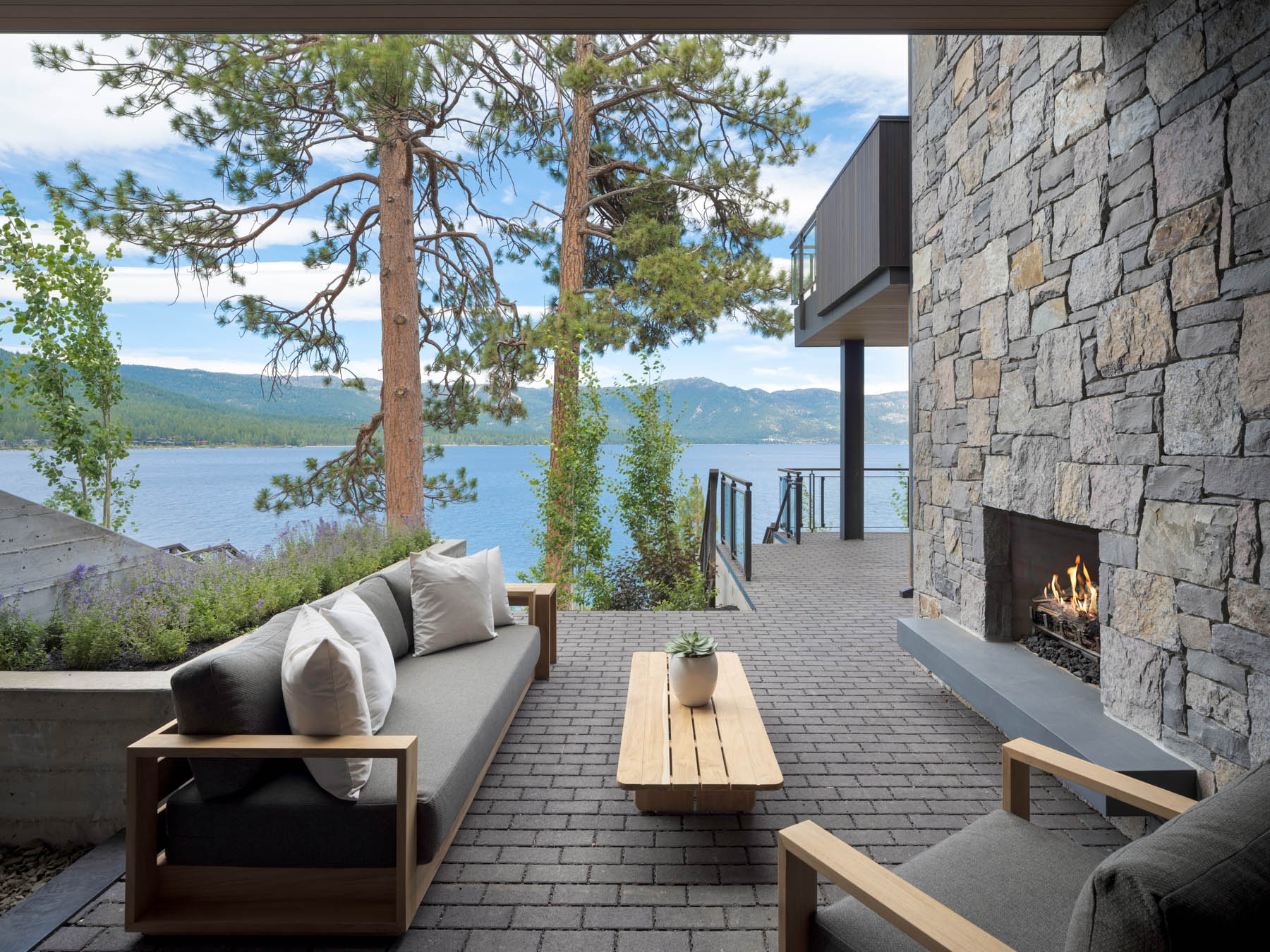
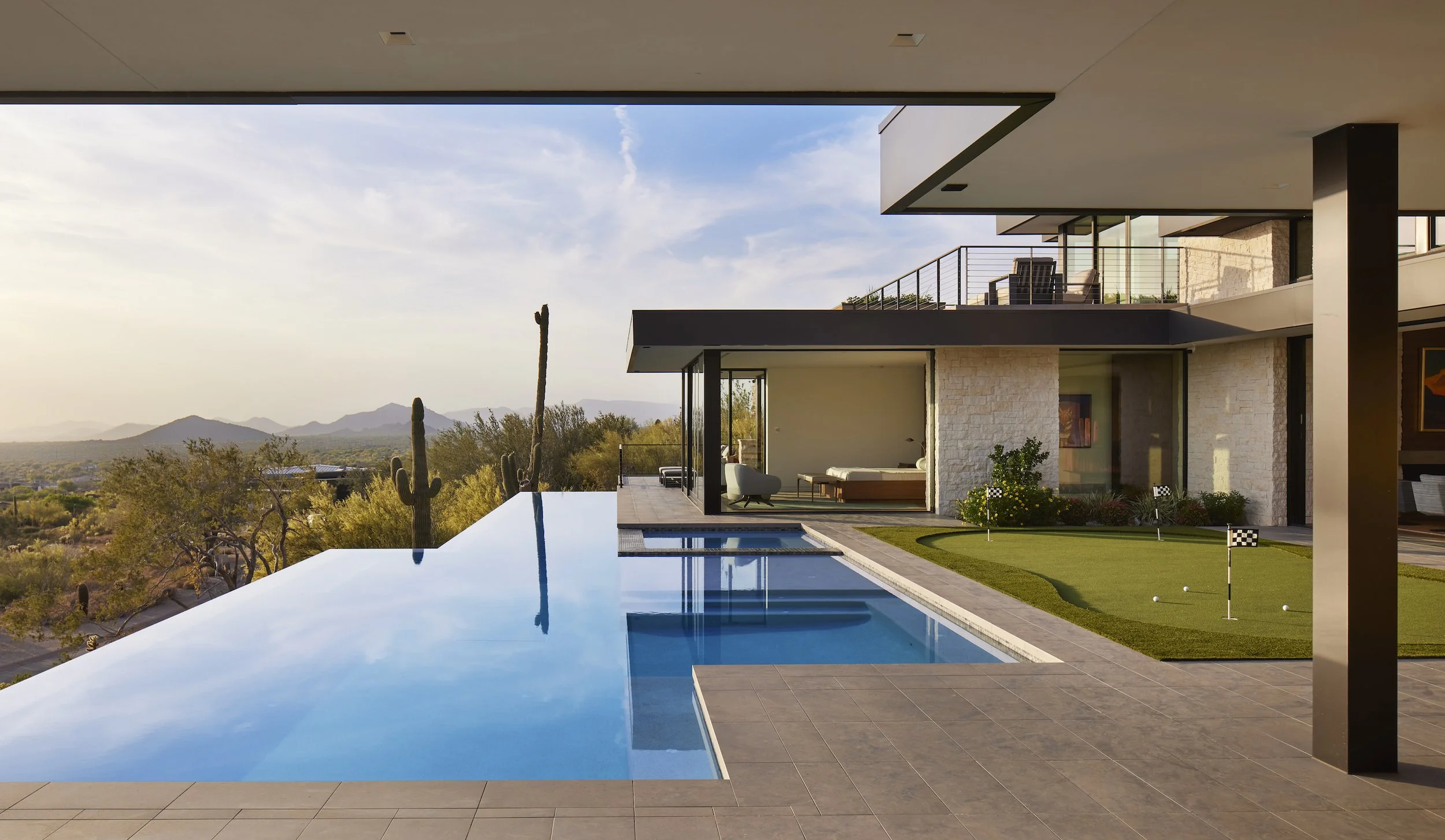
In desert landscapes especially, the boundary between inside and outside becomes less a barrier and more a negotiation. Rather than retreating from the environment, architects are increasingly designing homes that engage it with precision and intention. Terraces extend the interior floor plane outward, pools reflect sky and horizon like liquid mirrors, and glass walls erase the visual threshold between shelter and landscape.
The effect is not simply aesthetic. It reshapes the experience of living within a place that is both dramatic and demanding. A shaded terrace becomes an outdoor living room that captures cooler evening air. Deep overhangs filter the intensity of the sun while allowing the desert to remain visually present. Sliding glass walls open entire elevations so that rooms breathe outward toward mountain, valley, and sky.
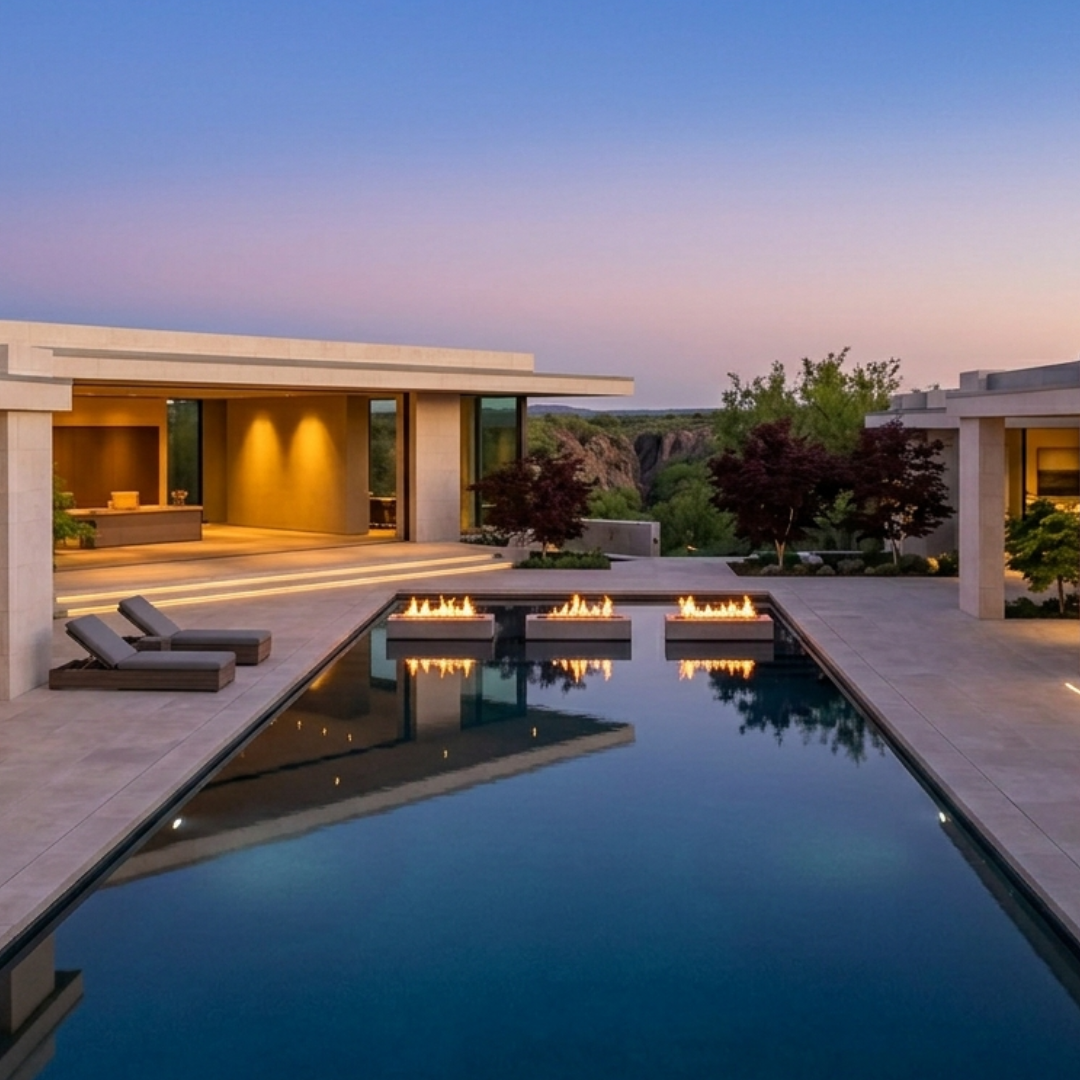
In extreme environments, these gestures require careful calibration. Materials must withstand heat and dust. Structural overhangs must be deep enough to temper solar exposure. Pools are positioned not only as recreational features but also as thermal and visual counterpoints to the surrounding terrain. Their reflective surfaces double the sky, cooling the visual palette of stone and earth.
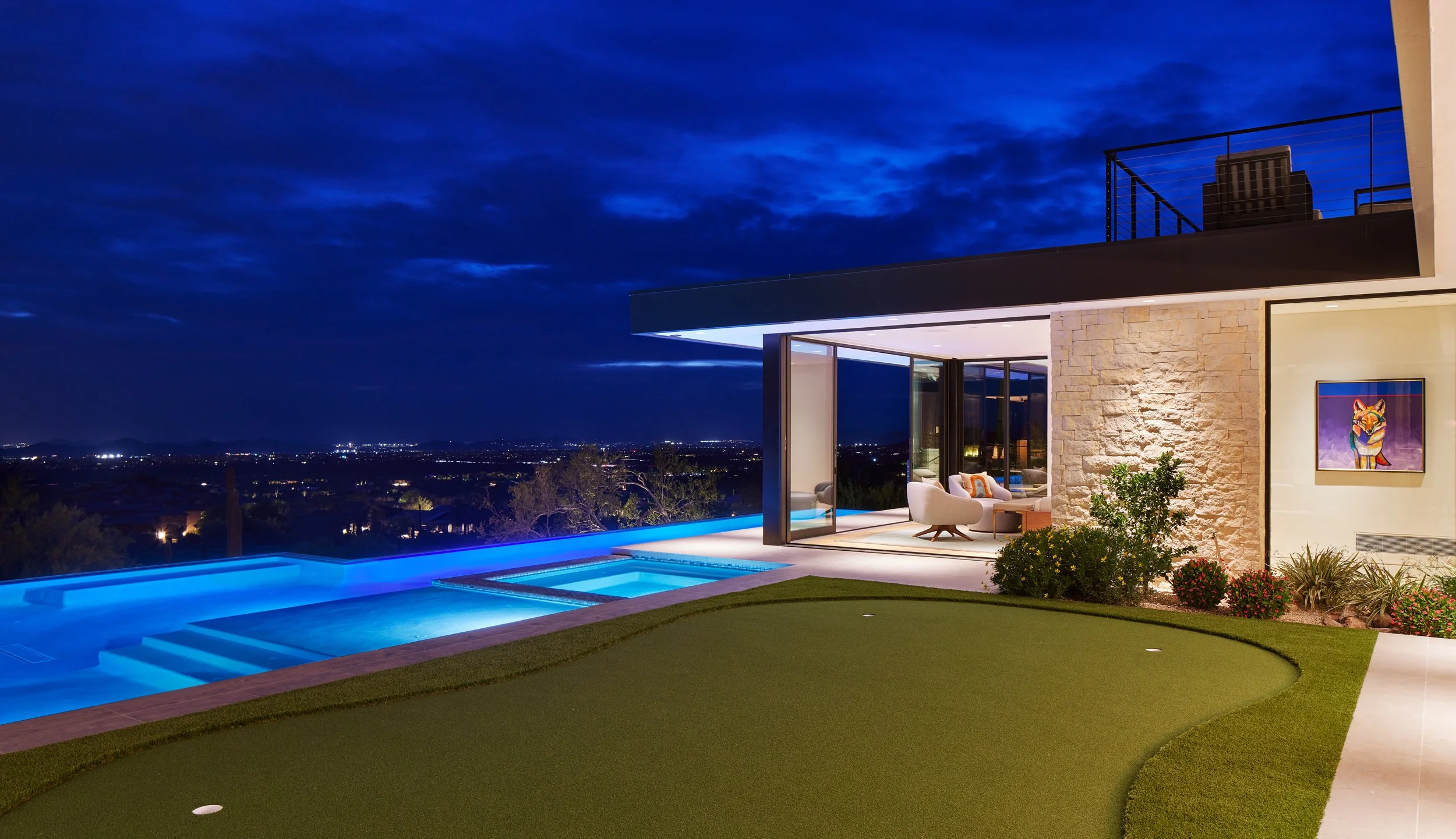
What emerges is a spatial choreography where architecture, climate, and landscape operate as one system. The interior is not a refuge from the desert but a frame through which it is experienced. Morning light washes across stone floors before spilling onto terraces. The pool edge aligns with the horizon so that water and valley appear to merge. Even the smallest outdoor garden becomes part of the daily visual rhythm of the home.
In this way, indoor outdoor living in extreme landscapes becomes less about openness and more about connection. The house acknowledges the power of its surroundings while providing moments of comfort, shade, and pause within it.
The result is a form of living that feels both grounded and expansive. The desert remains vast, ancient, and uncompromising, yet through thoughtful design it becomes something residents experience intimately, day after day, from the quiet shelter of home.