Hearth as Architecture
Image Credits: Lepang Ferguson
The return of the fireplace as the emotional and spatial centre of the home
There are elements within a home that do more than serve a function. They organise space, they influence movement, and they quietly shape how people gather without ever demanding attention. The fireplace is one of those elements. In contemporary architecture, it has returned not as an accessory, but as an anchor. A point around which everything else begins to make sense.
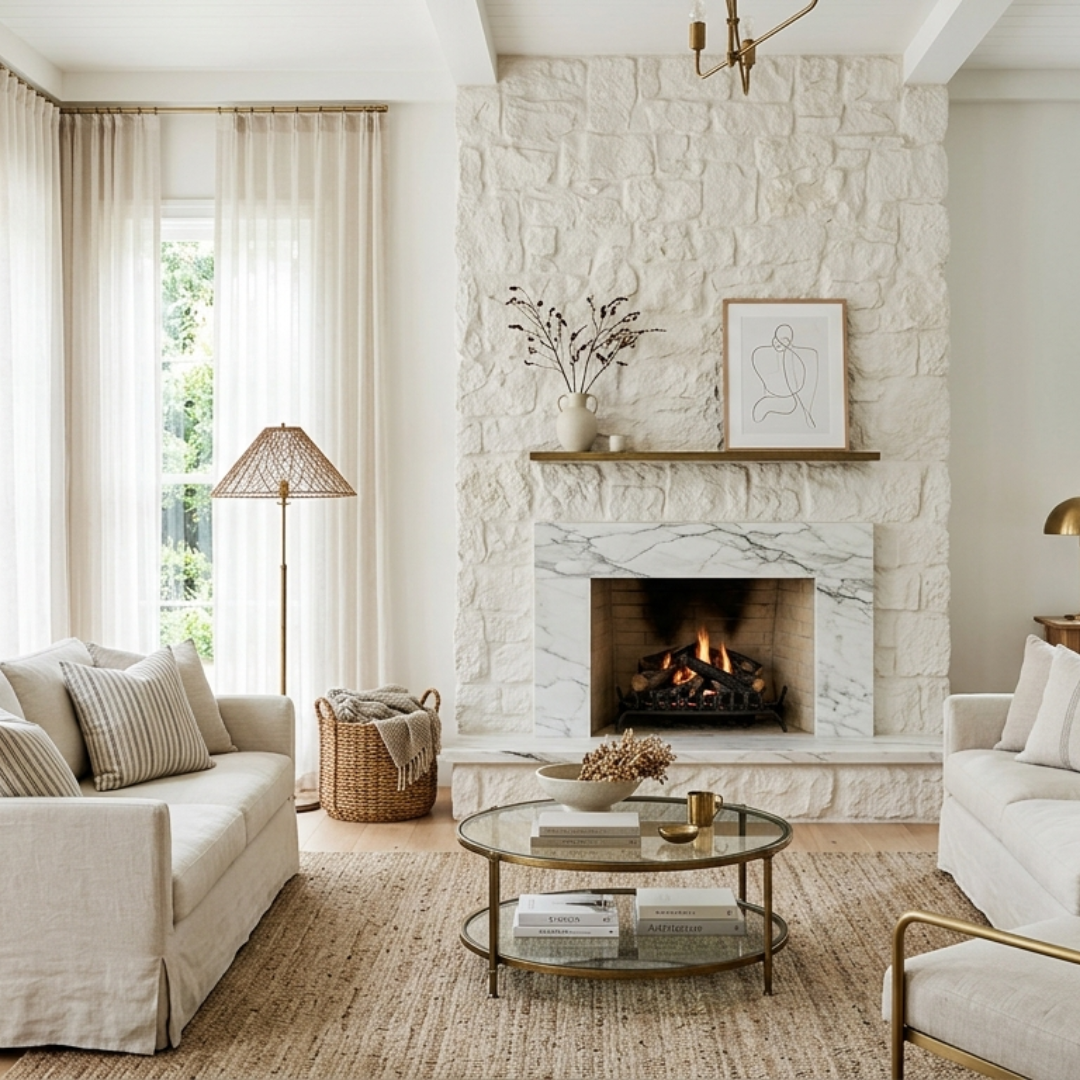
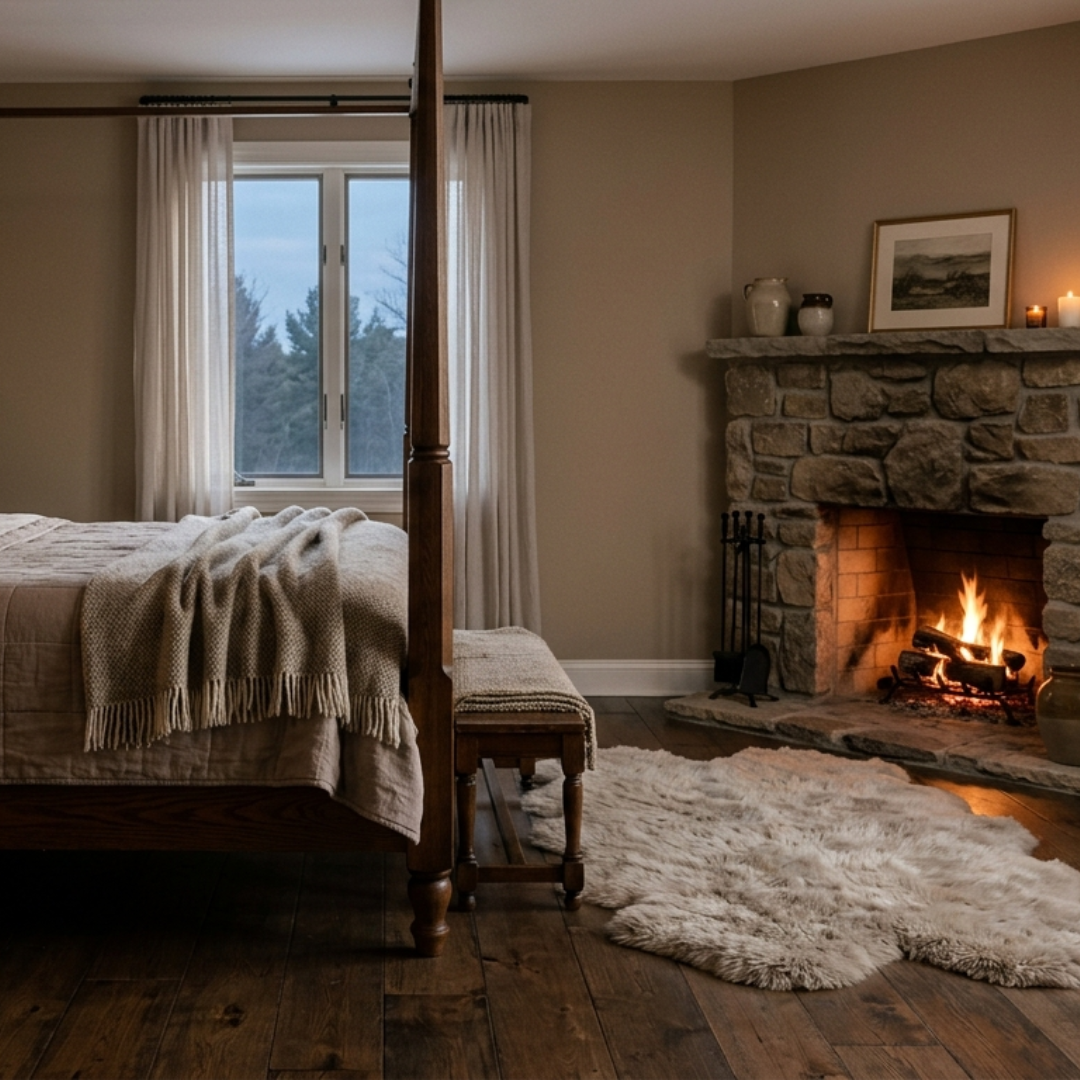
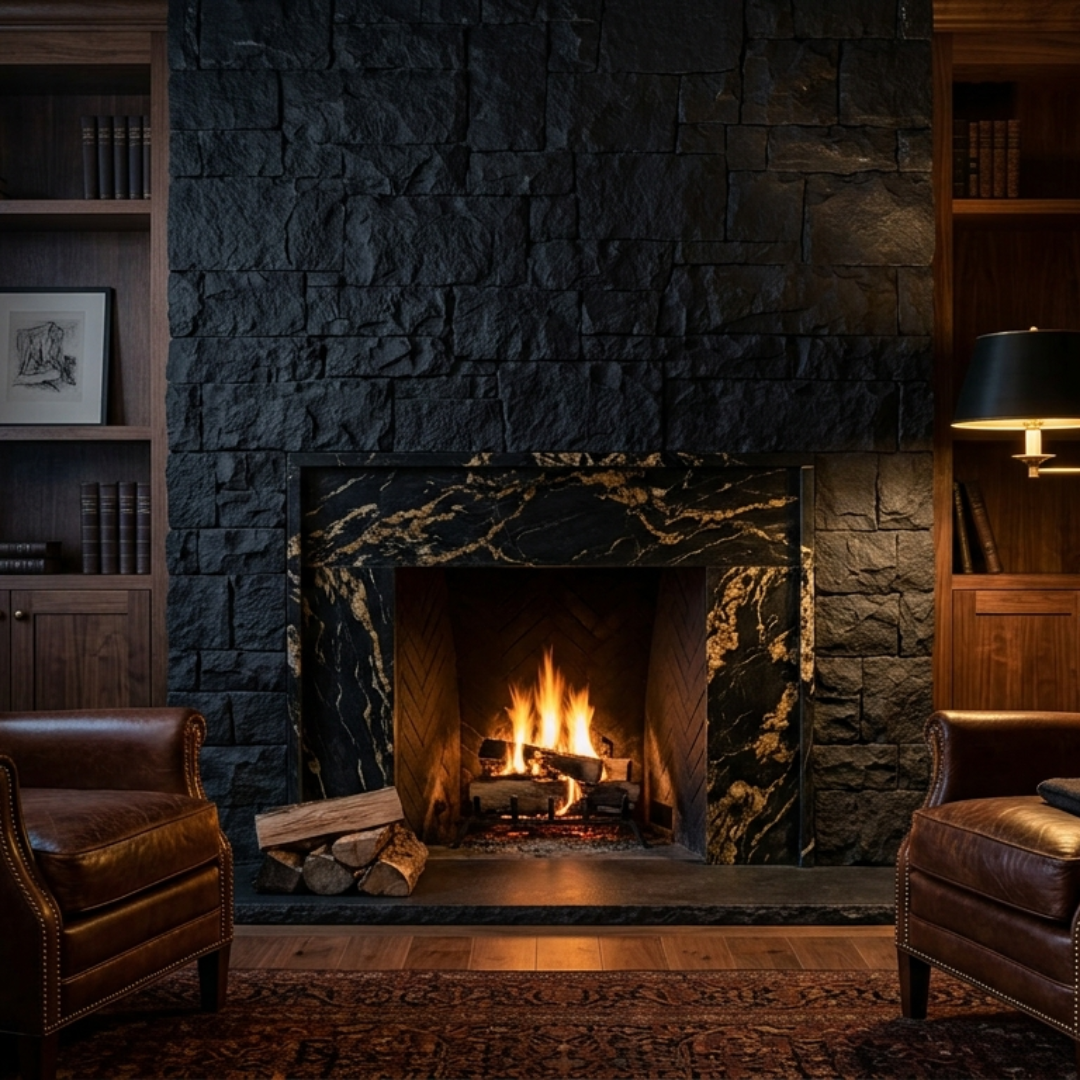
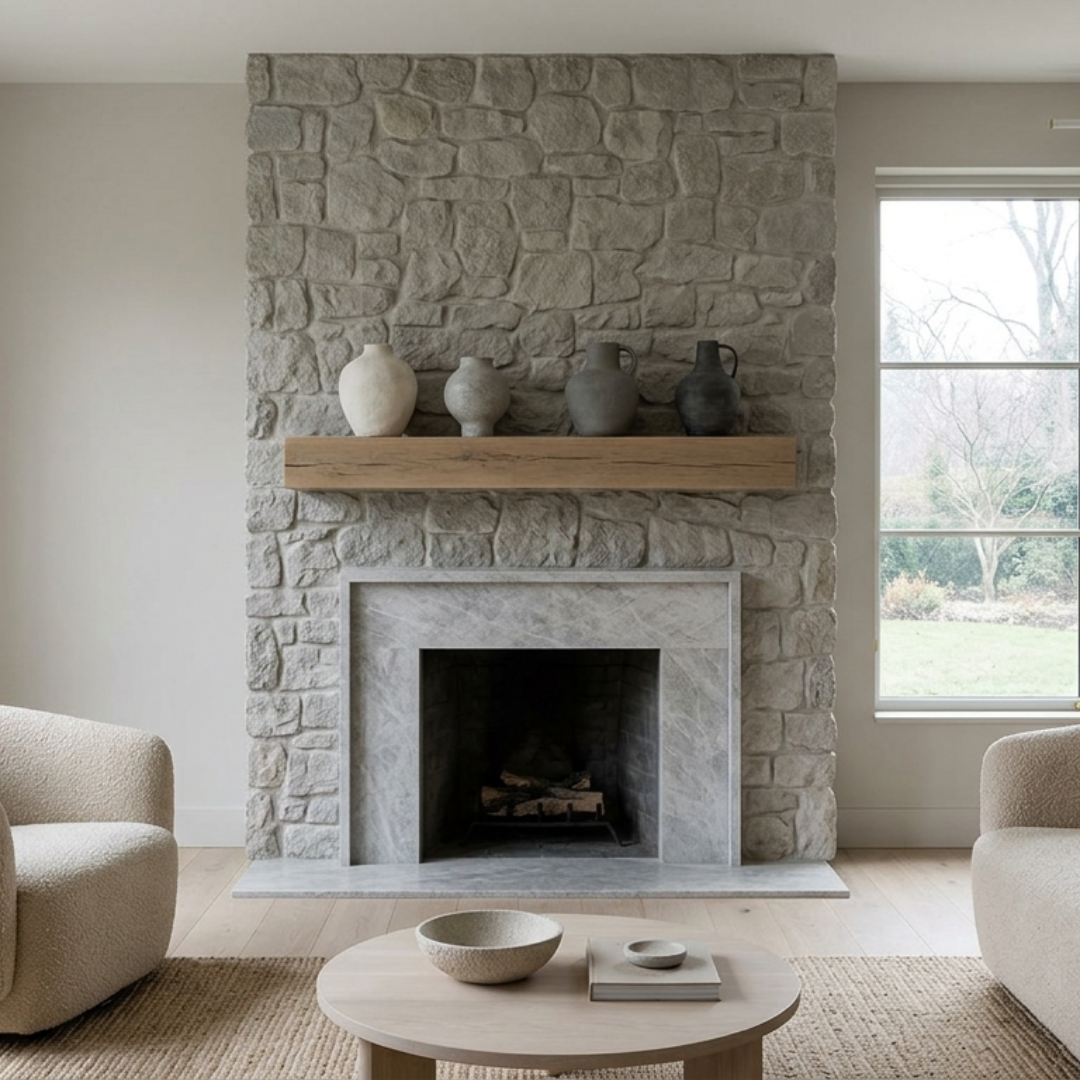
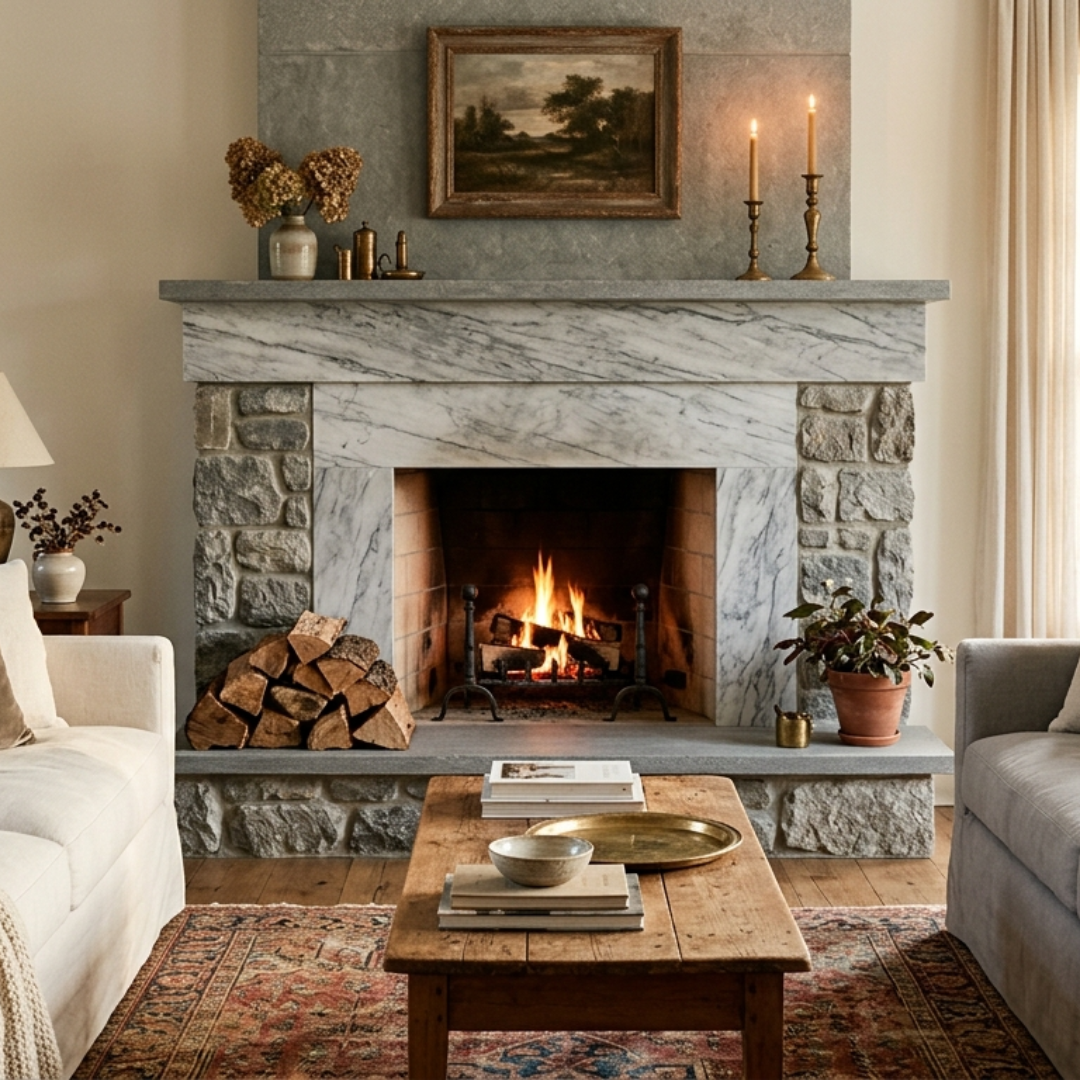
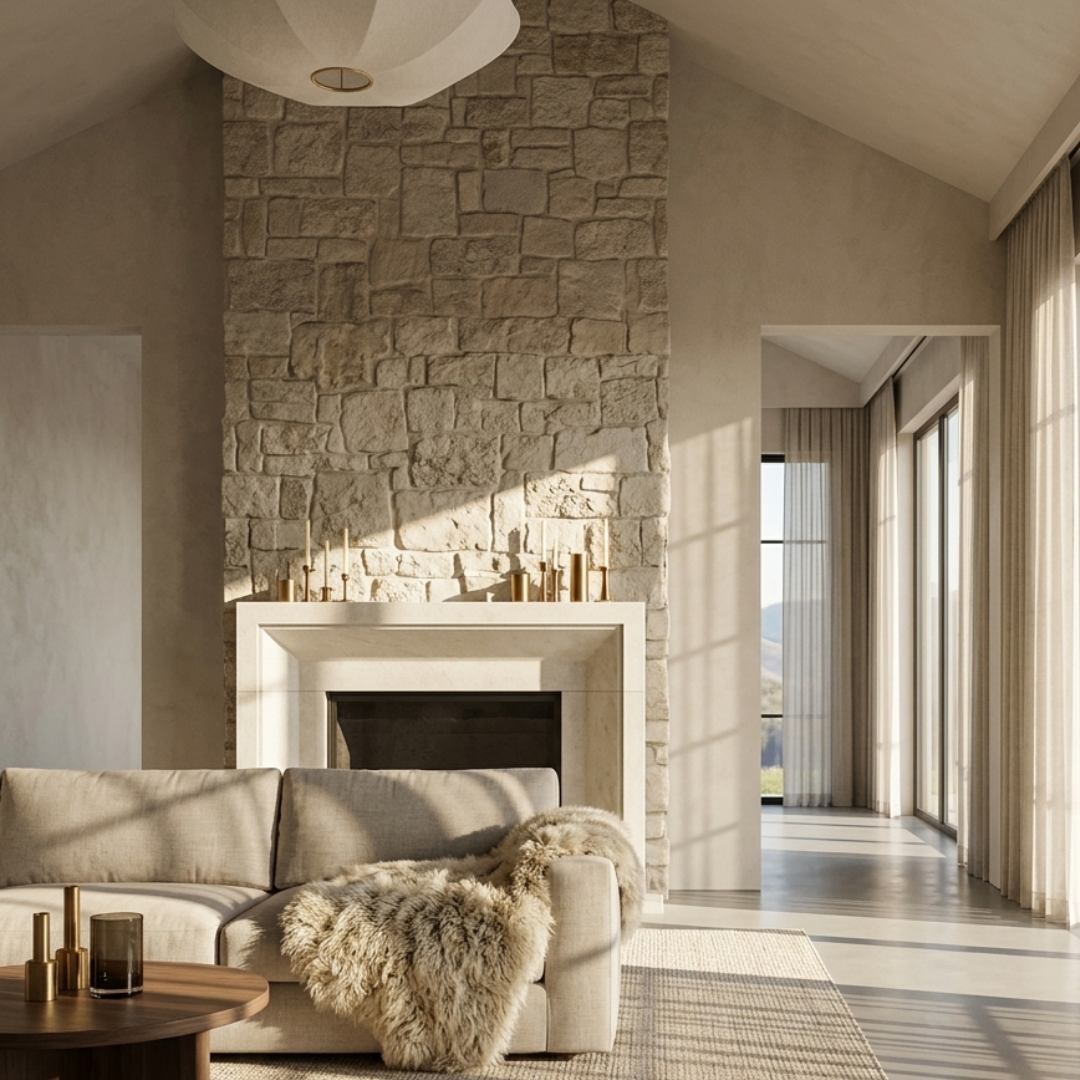
In the modern home, where openness often defines the plan, the hearth reintroduces a sense of grounding. It gives scale to space that might otherwise feel boundless. A stone fireplace, whether carved from limestone or built from layered river rock, holds presence in a way few other architectural features can. It carries weight, not only physically but emotionally, creating a natural centre that draws people inward.
What is most compelling is how it changes behaviour within a space. Seating is no longer arranged arbitrarily. It begins to orbit the fireplace with intention. Conversations naturally gravitate towards it. Even silence feels different when held in its proximity. It becomes less about the act of heating a room and more about shaping how a room is experienced.
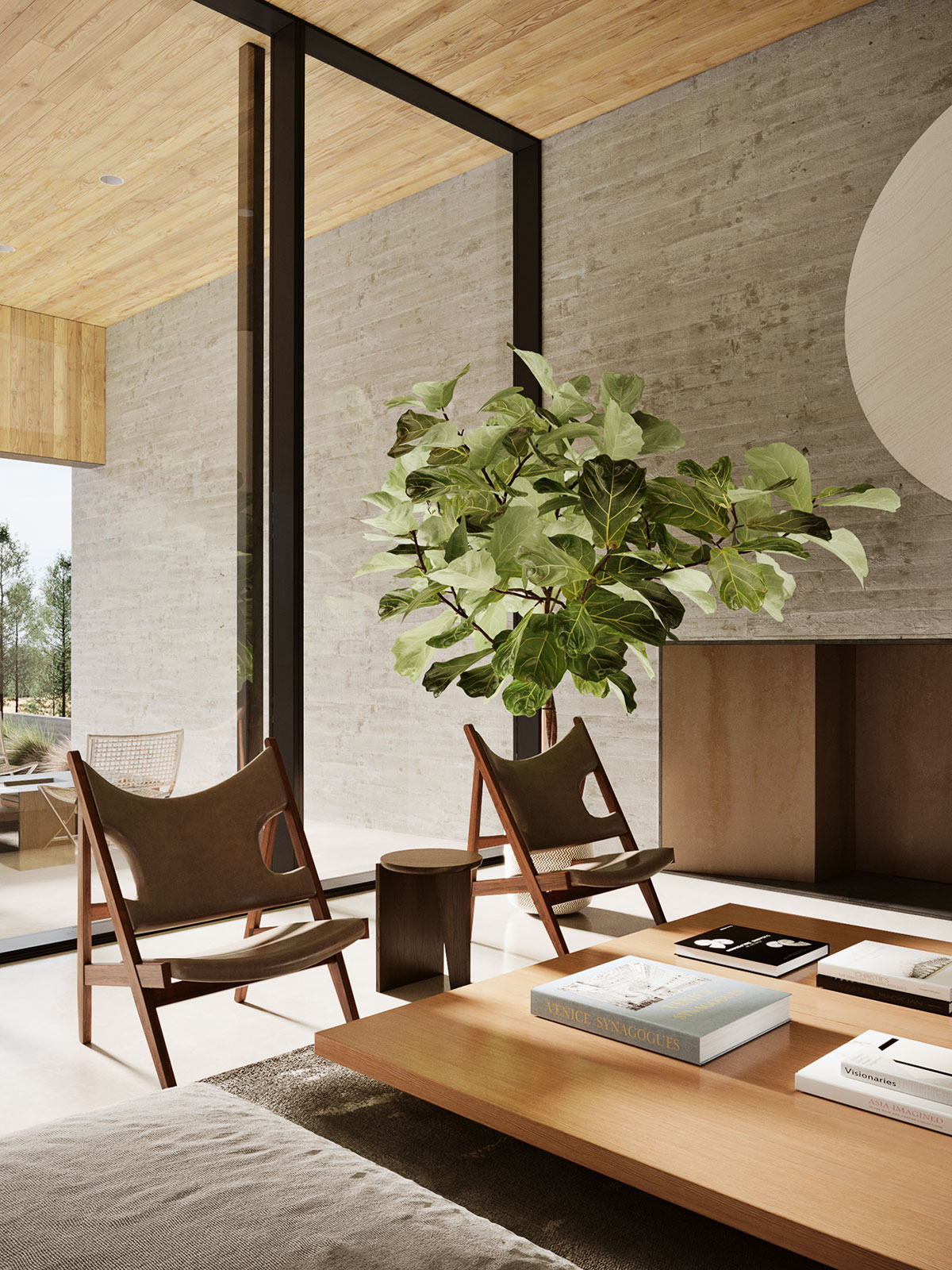
In homes where materials are carefully considered, the fireplace becomes an expression of texture and proportion. Limestone offers a quieter refinement, its surface smooth and composed, allowing the architecture around it to remain calm and understated. River stone introduces a more tactile presence, irregular and expressive, bringing shadow and depth into the heart of the home. Both approaches carry the same intention, which is to create warmth not only in temperature but in atmosphere.
There is also something deeply familiar about the hearth. Long before it became a design feature, it was the centre of domestic life. A place of gathering, storytelling and rest. Its return in contemporary homes is not nostalgic in a literal sense, but emotional in its recognition of what people still seek within architecture. Connection, comfort and a sense of belonging.
Even in large and expansive homes, the fireplace has the ability to make space feel intimate. It compresses scale without reducing openness. It slows time without interrupting flow. It creates a quiet gravity that holds the architecture together.
In this way, the hearth is no longer simply a detail within the home. It is part of its structure, part of its rhythm and part of its emotional architecture.