The Mid-Century Legacy
Image Credits: Lepang Ferguson
How Design Icons Shape the Way We Live Now
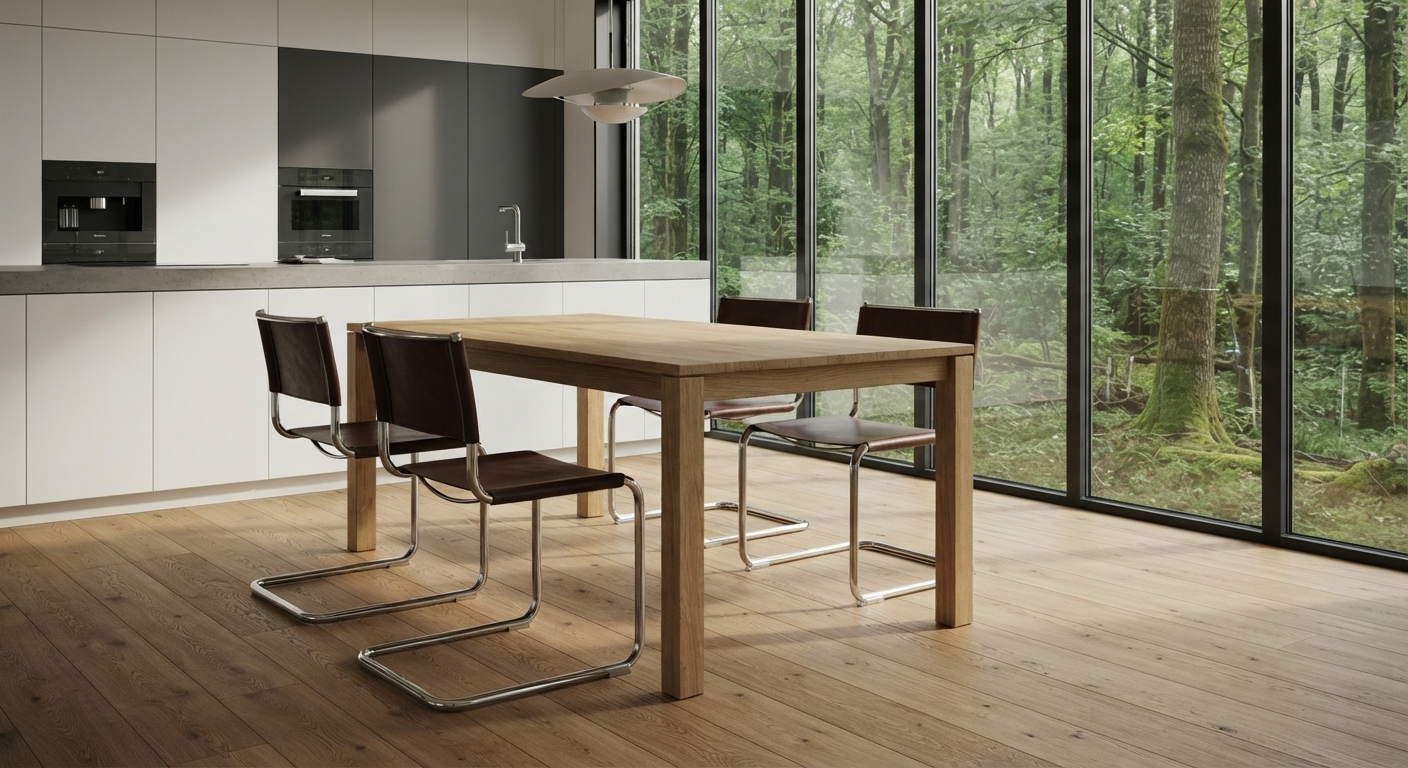
There is a quiet conversation happening in the Hidden Lakes Residence, one that transcends the architecture itself. It is a dialogue between past and present, between the cantilevered glass box that floats among the trees and the furniture that fills it. The home, designed by Lucid Architecture, is a masterclass in restraint, yet its interior spaces are animated by something deeper: the enduring influence of mid-century modern design and the visionaries who defined it.
The Hansens and the Danish Modern Movement
Few names carry as much weight in the world of furniture design as Carl Hansen & Søn. The company’s story began in 1908 when Danish cabinetmaker Carl Hansen opened a small workshop on the island of Funen . For over a century, the success of this family business has depended on two core ideas: an uncompromising commitment to craftsmanship, and alliances with designers who continually reinvent the concept of modern design .
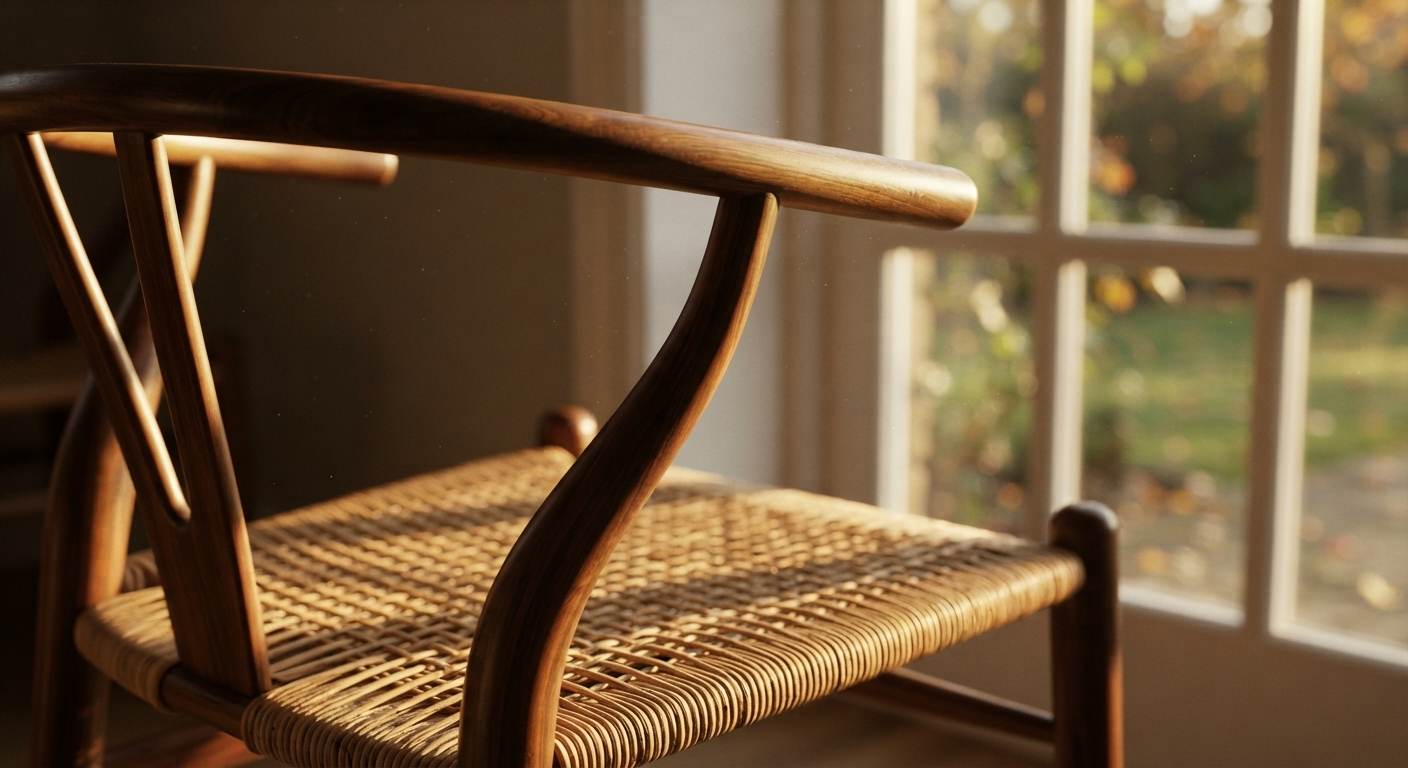
The creative partnership that would define the company began in 1949, when Carl Hansen’s son Holger took a chance on a then-unknown designer named Hans J. Wegner . Wegner developed a furniture series that included the now-iconic Wishbone Chair, and the collaboration demonstrated what could be achieved when visionary design met uncompromising production .
In the 1950s, Wegner emerged as a driving force in the international success of the Danish Modern movement . His works became widely recognized as modern classics and treasured collector’s items around the world, his legacy remaining an essential part of the company’s DNA . Today, Carl Hansen & Søn continues to work closely with the Hans J. Wegner Studio and remains the world’s largest producer of Wegner’s furniture .
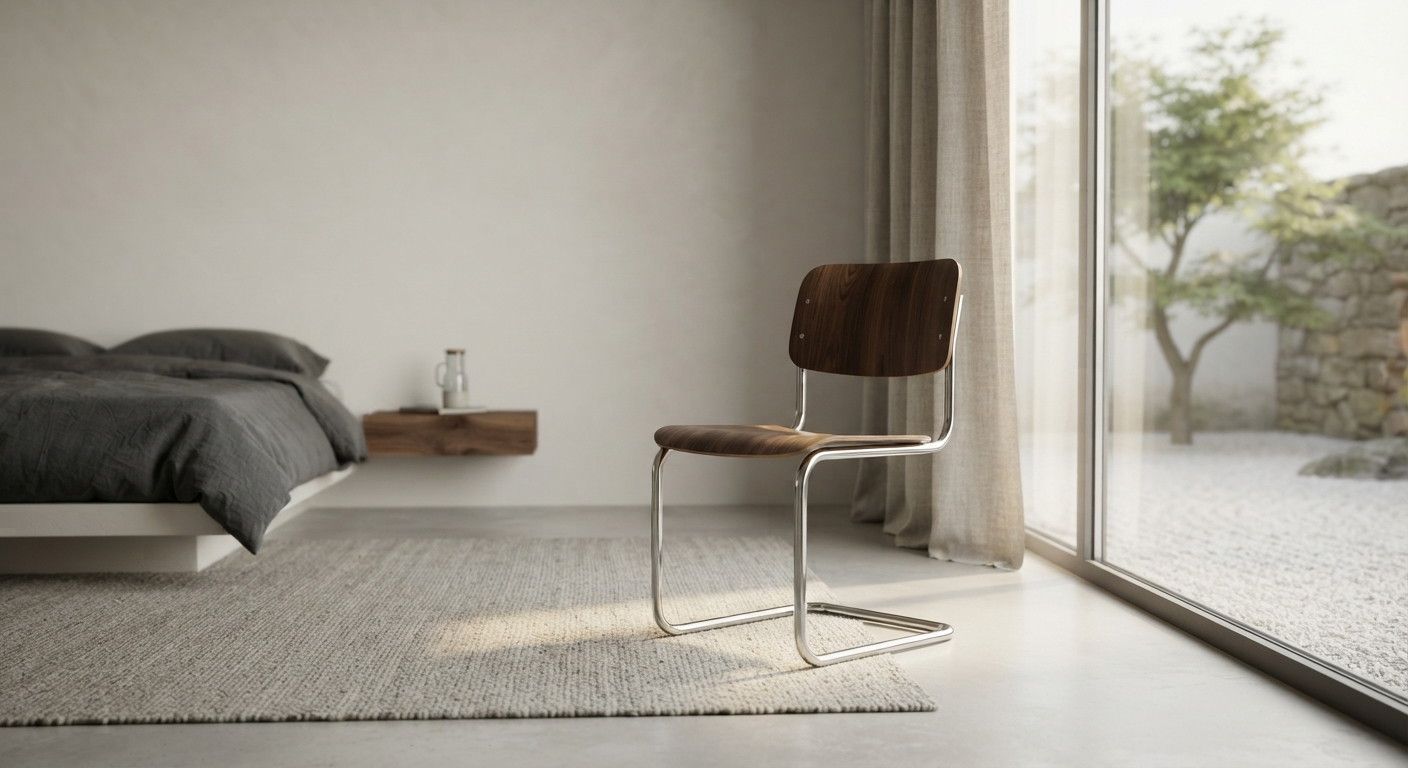
But the influence extends far beyond Wegner alone. Carl Hansen & Søn represents more than 100 years of Danish design history, producing furniture created by renowned designers such as Arne Jacobsen, Børge Mogensen, Ole Wanscher, Kaare Klint, Poul Kjærholm, and Bodil Kjær . Each brought their own philosophy to the craft, yet all shared a commitment to simplicity, aesthetics, and functionality brought to life through skillful work with the highest quality materials.
The Enduring Appeal of Mid-Century Modern
The term “mid-century modern interior design” conjures images of sleek, pared-down designs, an emphasis on both function and form, innovative use of materials, and a connection to nature . While most design trends are cyclical, the movement that began in the mid-1940s has never really gone out of favor .
Eames Demetrios, Charles and Ray Eames’ grandson, equates mid-century modern’s staying power to one of the movement’s key traits: problem-solving solutions . “A lot of these designs, and certainly the Eames’ ones, were not made with style as their first intent. Style can be there, but they were all designed to solve problems with living and how to live better,” he explained . This philosophy, that furniture is architecture at a scale you can handle, resonates deeply with contemporary designers and homeowners alike .
Jonathan Adler, whose eponymous furniture collection is heavily influenced by the era, distills mid-century modern as “stripping away unnecessary ornamentation and really getting to the essence of a design gesture” . He adds, “That clarity of vision is innately communicative, and communication is ultimately what good design is about”.
The Connection to Nature
One of mid-century modern’s defining characteristics is its emphasis on spaces that meld indoors and out . Molly Purnell, co-founder of LA-based interior design firm Laun, notes that this connection remains a priority in contemporary projects . “I think the open connection between the interior and outdoor space is one of [mid-century modern’s] defining characteristics and we see that very much today,” she says .
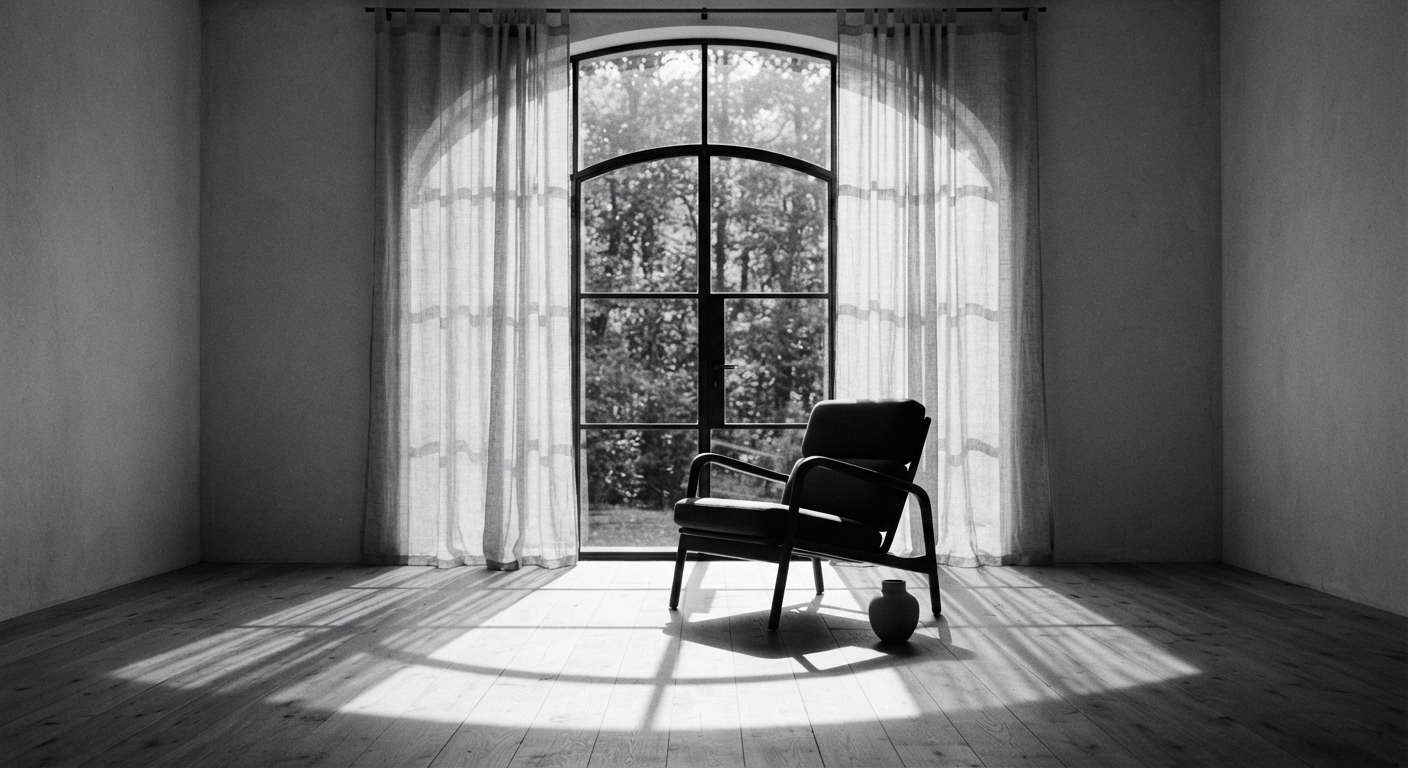
This principle is powerfully evident in the Hidden Lakes Residence. The home’s floor-to-ceiling glass curtain wall dissolves the boundary between interior and exterior, allowing the landscape to become part of the living space. The same impulse that drove mid-century architects to create seamless indoor-outdoor transitions is present here, updated for a new generation.
A Living Legacy
Knud Erik Hansen, the third-generation leader of Carl Hansen & Søn, understands that legacy is not about preserving the past but allowing it to evolve . “Our responsibility is twofold,” he explains. “We are custodians of an important design legacy, but we must also ensure that it continues to evolve. That means working with new designers, introducing new furniture typologies, and allowing craftsmanship to remain relevant in contemporary life” .
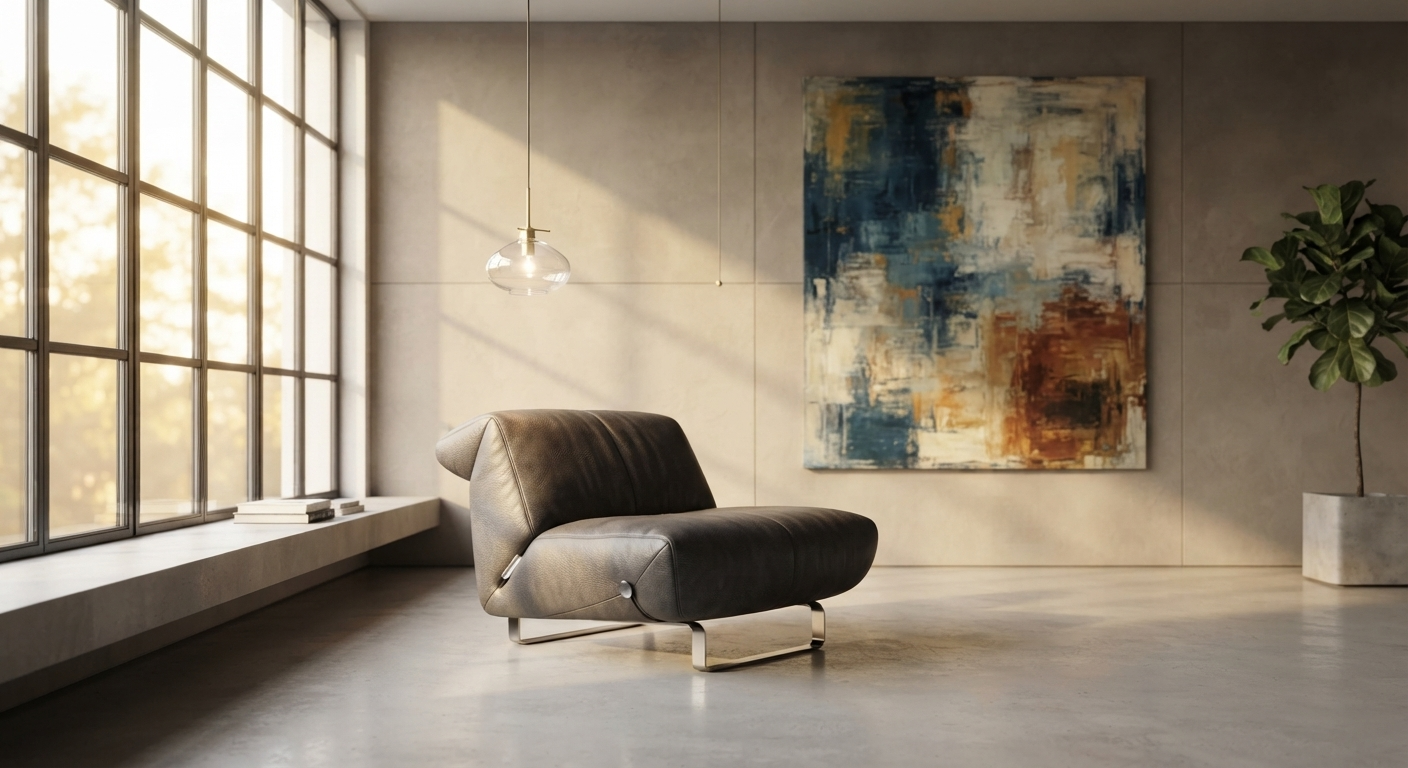
This philosophy is evident in collaborations with contemporary designers like Rikke Frost, whose Sideways sofa expands the company’s repertoire while honoring its heritage . Frost’s designs, characterized by rounded shapes that encourage human interaction and a focus on balancing digital devices with presence, represent the next chapter in a story that began over a century ago.
The Future of Mid-Century Influence
As the Hidden Lakes Residence demonstrates, mid-century modern design is not a style to be replicated but a philosophy to be embraced. Its principles, simplicity, functionality, craftsmanship, and connection to nature, are as relevant today as they were in the 1950s. The furniture that fills this floating glass box is not merely decorative; it is a continuation of a conversation that began with designers like Hans J. Wegner, who understood that great design is not about imposing style but about solving problems and enhancing lives .
In a world of disposable furniture and fleeting trends, the enduring appeal of mid-century modern offers something increasingly rare: the promise of longevity. As Knud Erik Hansen notes, “A chair that remains desirable for decades becomes an heirloom rather than a disposable item” . This is the true legacy of the Hansens and their contemporaries, a reminder that the most luxurious thing a piece of furniture can offer is not its price tag, but its ability to endure.