Building into the Trees
Image Credits: Lepang Ferguson
How a Michigan residence proves that the most luxurious homes are the ones that recede into their landscape rather than dominate it.
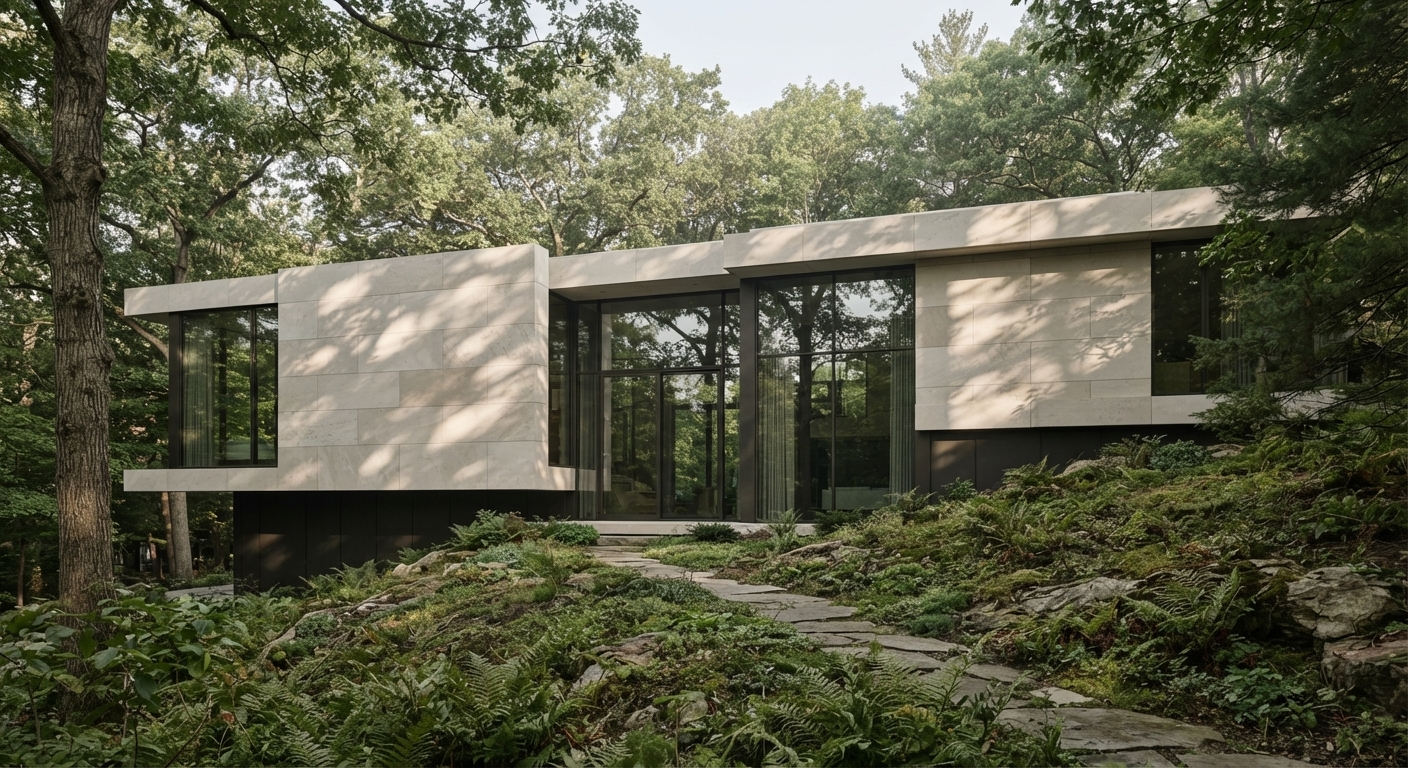
There is a growing movement in residential architecture that rejects the notion of the house as a monument. Instead, it embraces an idea that is both ancient and refreshingly modern: the home as a quiet presence, one that recedes into its landscape rather than asserting itself upon it. The Hidden Lakes Residence, designed by Lucid Architecture, is a masterful example of this philosophy in practice, a house that seems to have grown from the very trees that surround it.
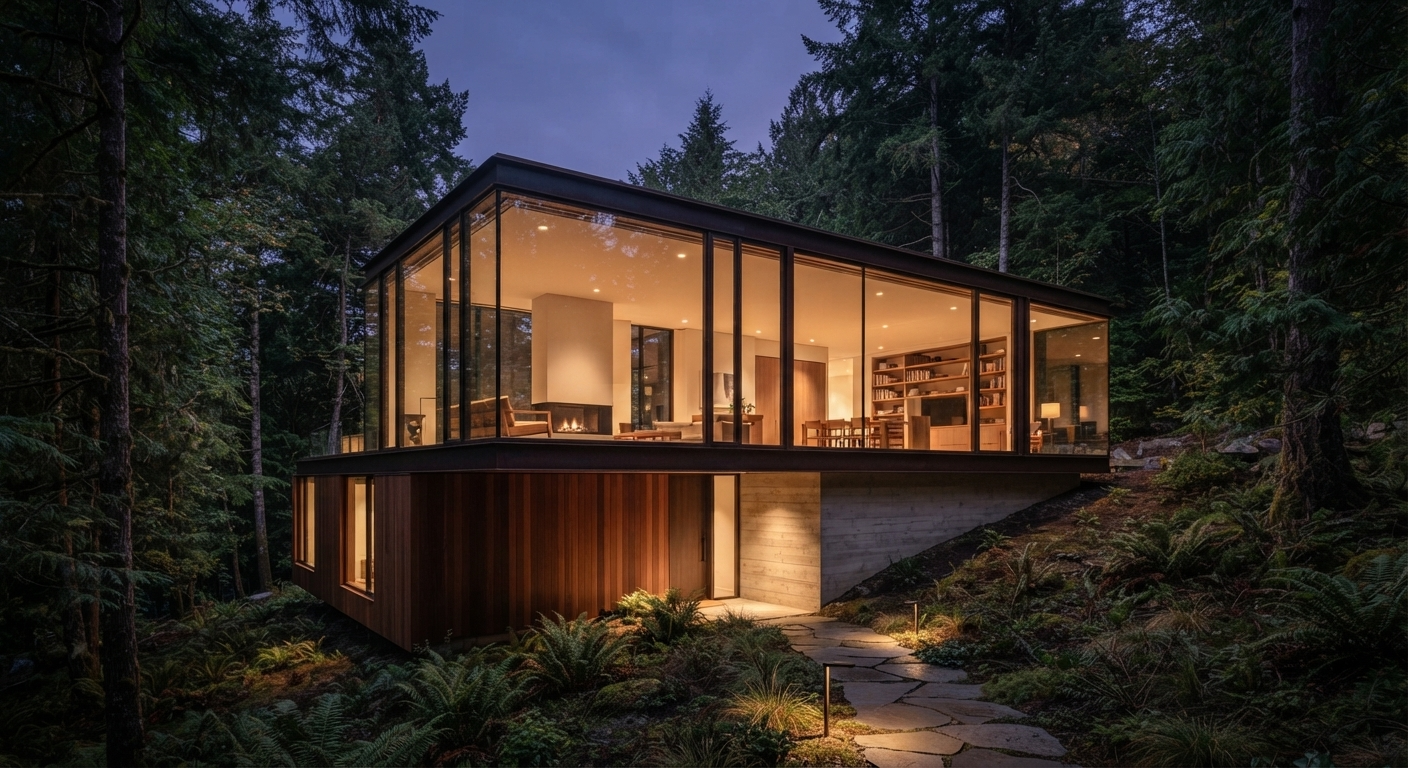
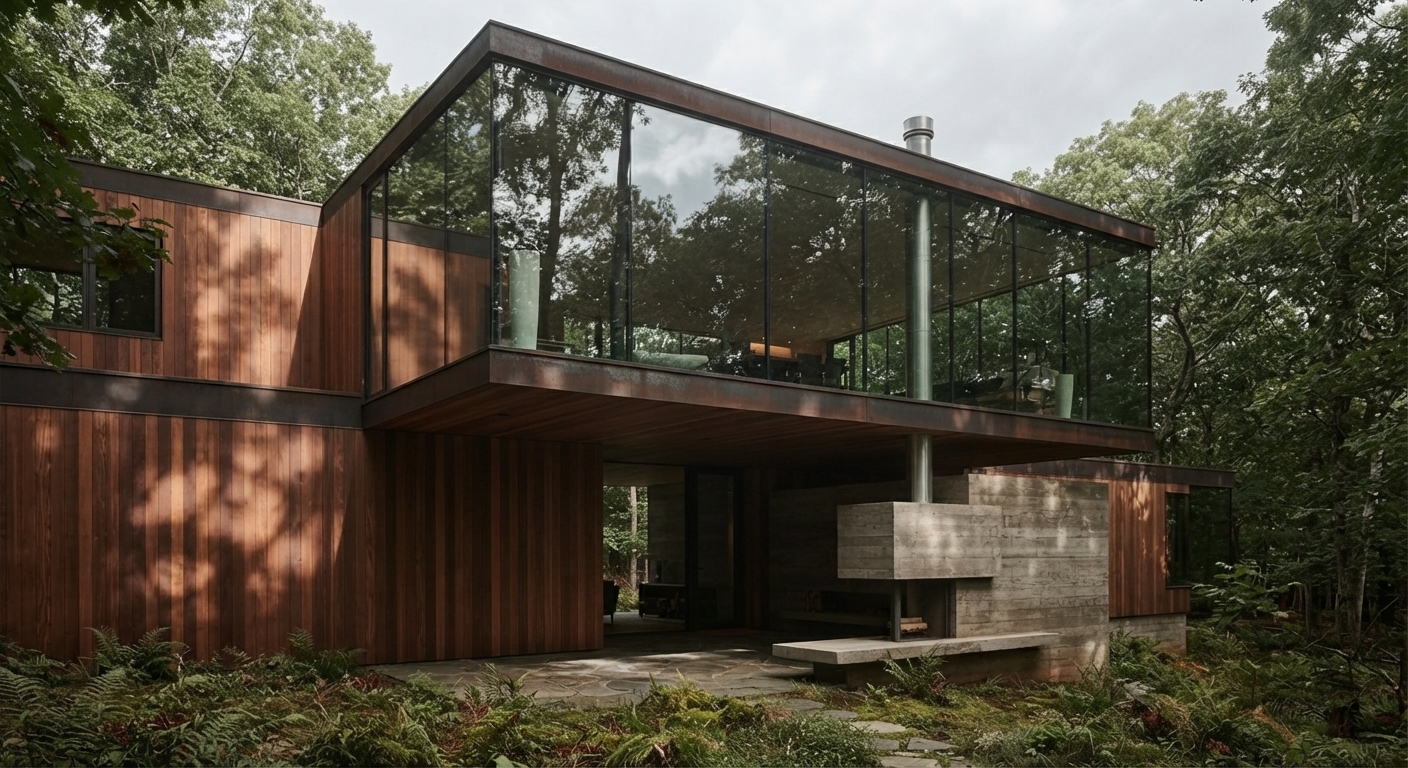
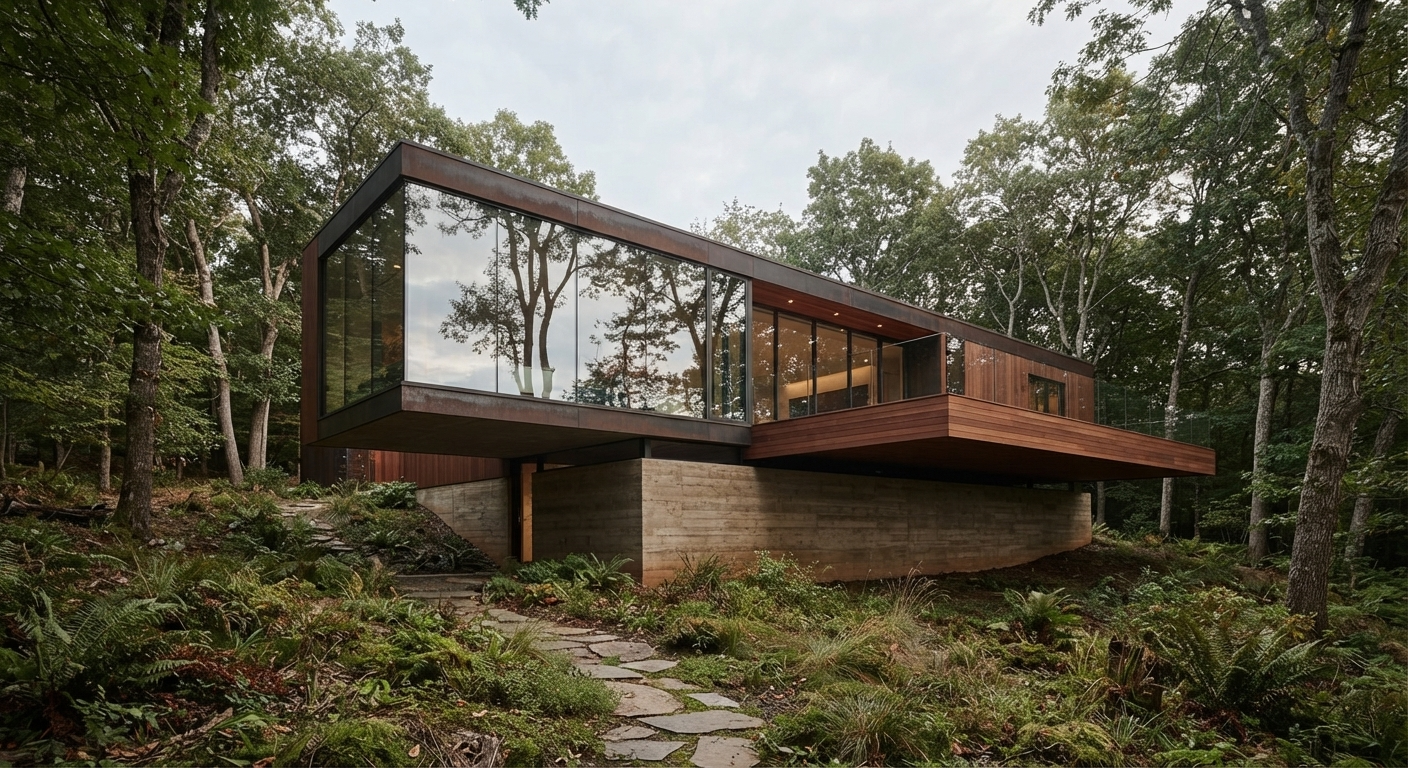
The client’s brief was simple in its clarity: build into the trees. This was not a request for a treehouse, but for something more sophisticated, a home that felt as though it had grown from the site rather than been imposed upon it. The architects responded with a strategy of careful disengagement. The public spaces, including the living, dining, and kitchen areas, were lifted above the sloping terrain, forming a glass box that appears to float among the canopy. This cantilevered gesture creates the illusion of weightlessness, allowing the house to hover rather than settle.
The sloping site, which might have been seen as a constraint by a less confident design team, became the very foundation of the architectural concept. Rather than fighting the topography, the architects worked with it, allowing the land to inform every decision. The home’s private spaces were tucked into the more solid bar of the structure, set into the slope for seclusion and views of the wooded ravine below. This zoned approach creates a natural rhythm: the house descends with the land, its public face turned toward the fairway, its private side nestled into the forest.
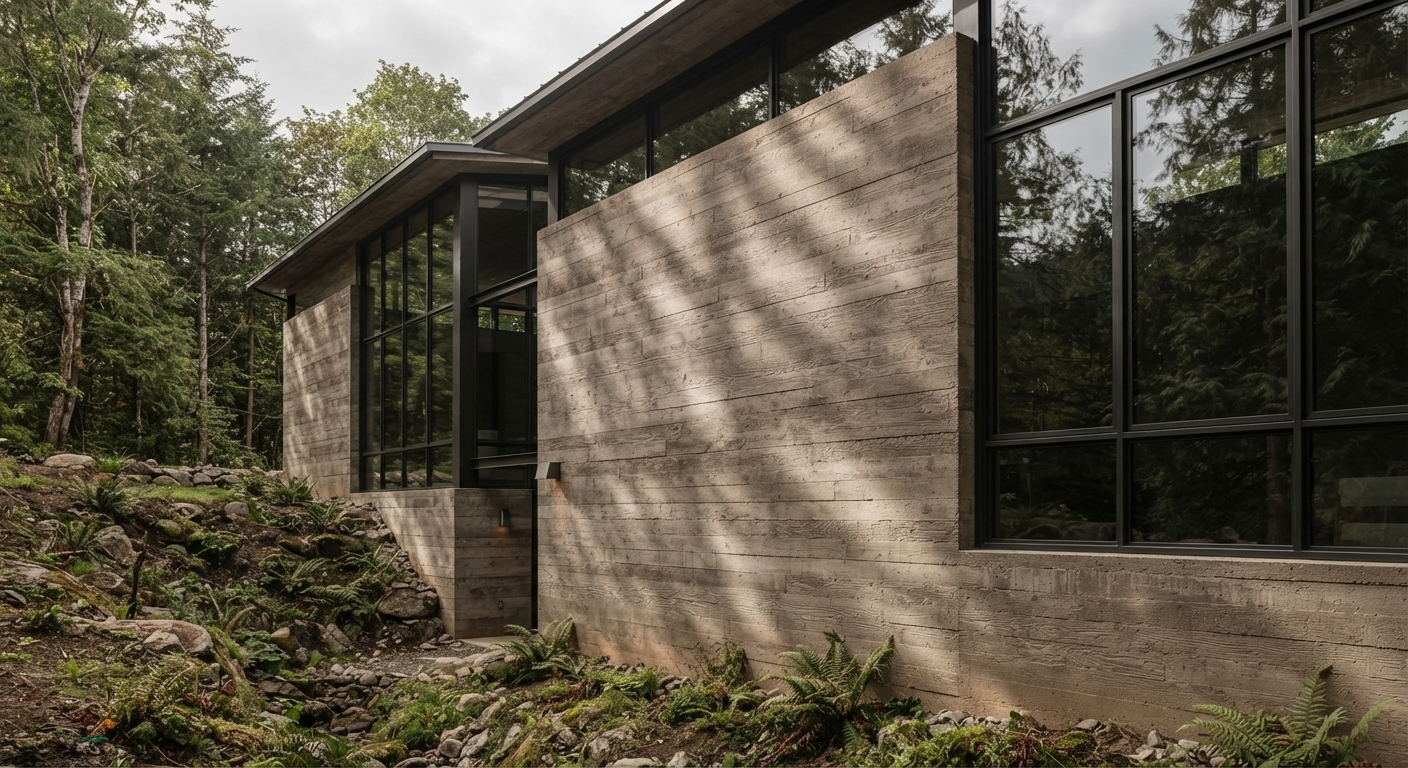
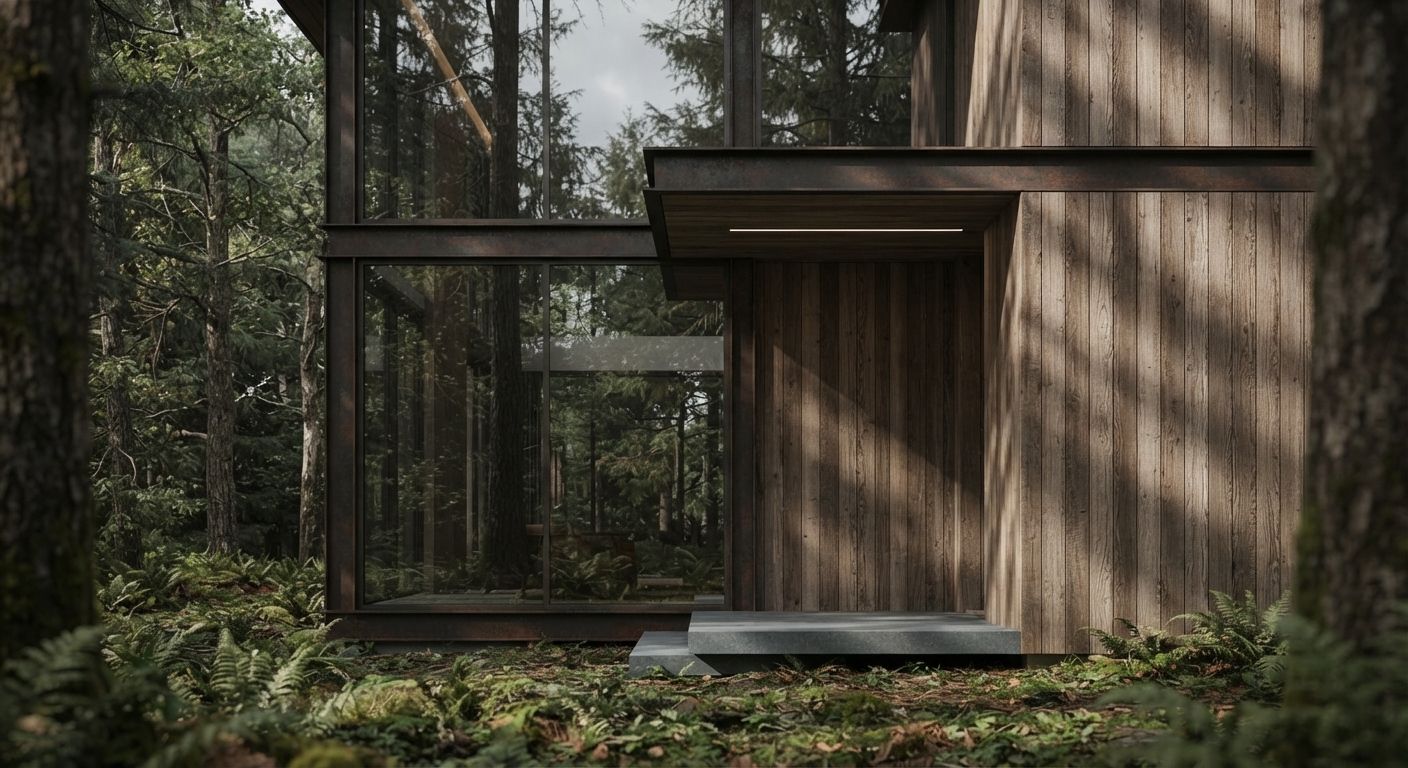
Materiality plays a crucial role in this disappearing act. The architects chose a palette that mirrors the surrounding landscape: warm western red cedar that echoes the bark of the trees, board-formed concrete that recalls the geology of the ravine below, and ultra-clear glass that dissolves the boundary between inside and out. The patina-finished steel accents are deliberately dark and muted, refusing to compete with the greens and browns of the forest. The house is not trying to be seen. It is trying to be felt.
This is where the art of the disappearing home reveals its true sophistication. It is not about making the house invisible, but about making it so carefully considered that it becomes part of the natural rhythm of the site. The adjustable louvers on the glass wall, for example, are not just functional. They are a gesture of respect toward the neighbouring homes, offering privacy without sacrificing the connection to light and landscape. Every element serves a dual purpose: to frame the view and to recede from it.
The result is a home that offers something increasingly rare in contemporary architecture: the luxury of subtlety. It does not announce itself with dramatic gestures or oversized forms. Instead, it reveals itself slowly, offering moments of quiet discovery as one moves through the space. The views of the golf course and ravine are framed with restraint, never overwhelming but always present. It is a house that respects the land it sits upon.
In an age where architecture is often about spectacle, about being seen and photographed, the Hidden Lakes Residence stands as a quiet counterpoint. It asks us to reconsider what makes a house truly luxurious. Is it the size? The grandeur? Or is it the way a home makes us feel connected to the world around us, grounded and elevated all at once. The client captured this sentiment perfectly when he observed, “It’s almost as though Eric designed the house to build into the trees.” It is a line that speaks to the very heart of the disappearing home, a house that does not take from the landscape, but joins it.
As we look toward the future of residential architecture, the principles of the disappearing home offer a compelling direction. It is a response to the growing awareness of environmental stewardship, a desire for connection to nature, and a rejection of excess in favor of meaning. The Hidden Lakes Residence is more than just a beautiful home. It is a declaration that the most luxurious thing a house can offer is not square footage, but the feeling of belonging to the land.
The Art of the Disappearing Home is not about invisibility. It is about integration. It asks us to reconsider what makes a house truly luxurious. Is it the size? The grandeur? Or is it the way a home makes us feel connected to the world around us, grounded and elevated all at once. The Hidden Lakes Residence answers this question with a quiet confidence that lingers long after you have turned the page. It reminds us that the greatest luxury of all is not being seen, but being part of something larger than ourselves